Your Shanghai train station is part of the itinerary—not a small line on the ticket
Shanghai does not have one interchangeable “main train station.” A hotel near the Bund, an early train to Suzhou, a late arrival from Hangzhou and a flight from Hongqiao Airport can all point toward different practical choices. The right station is the one printed on the confirmed train booking; your task is to build the hotel transfer and the rest of the day around it rather than trying to force every journey through the station that looked most convenient on a map.
For most visitors, Shanghai Hongqiao Railway Station, Shanghai Railway Station and Shanghai South Railway Station are the names that matter. Shanghai also has other stations, including Songjiang and several smaller stops, so read the full station name in the Railway 12306 booking before you choose a hotel, arrange a driver or enter a destination in a ride-hailing app. Shanghai’s official station guide makes the same simple point: confirm the exact station before leaving.
Start with the train, not the hotel postcode. Check the departure or arrival station, train number, local date and time, passenger name as shown on the booking, and the original travel document needed for boarding. Then decide whether the station-to-hotel movement needs a private pickup, a taxi, the metro or a short walk through a familiar neighborhood. This order prevents the common mistake of saving a few minutes on a hotel search and losing an hour at the wrong terminal.
- Read the full station name on the confirmed ticket, not only the city name “Shanghai.”
- Keep the ticket, train number, hotel name and Chinese address available offline before leaving Wi-Fi.
- Treat station arrival time as the beginning of your transfer, not your arrival at the hotel or next attraction.
- For an early departure, plan the station hand-off the night before rather than improvising after checkout.
Shanghai Hongqiao Railway Station: use it as a transport hub, not a sightseeing base

Hongqiao Railway Station is the best-known rail hub for many visitors using high-speed services around the Yangtze River Delta. It is part of the wider Hongqiao transport hub and sits beside Hongqiao Airport, but a railway booking and a flight booking are still separate movements with separate terminals, check-in needs and walking or transfer time. Do not plan a tight rail-to-flight connection from a map alone.
Shanghai’s official station guide lists metro lines 2, 10 and 17 for Hongqiao Railway Station. That makes it well connected, but “connected” does not mean instant. The station is large, the correct exit may not be the one you first see, and a family, older traveler or anyone with substantial luggage may prefer a clear driver meeting point or taxi plan over a multi-line metro transfer. The choice should fit the actual hour, bags and hotel location.
Hongqiao can work well when the rest of the itinerary also belongs in the west of the city, when a nearby airport movement is fixed, or when the hotel-to-station route is simple. It is less useful as an excuse to add a long cross-city sightseeing circuit immediately before boarding. If you have time after arrival, use one connected nearby stop or go directly to the hotel, then let the first full day begin from a more sensible city base.
Shanghai Railway Station: central-city logic can matter more than the newest hub
Shanghai Railway Station is in Jing’an district on Moling Road, with metro lines 1, 3 and 4 listed in the city’s official station guide. For a traveler staying in central Puxi, near People’s Square, the Bund corridor, Jing’an or an older central neighborhood, its position can make the hotel transfer feel more direct than a cross-city return from another hub. The right choice still belongs to the train timetable; do not change stations simply because one looks better placed for sightseeing.
On arrival, do not assume the first taxi line or exit is the right pickup point for your hotel or driver. Stations may have multiple sides and designated areas, while rail construction, weather and crowd management can alter the quickest walking route. Share the train number, expected arrival time, passenger count and luggage before arranging a pickup. If meeting a guide or driver, agree the precise exit and a simple message plan rather than “outside the station.”
For a short Shanghai stay, this station can be a useful reminder that a train journey is not over at the platform. The best first move may be hotel check-in, luggage drop and a meal in the same district; it is rarely a rushed detour to the skyline before you have even settled in. Give the city enough time to begin well.
Shanghai South Railway Station and other stations: do not let an unfamiliar name become a wrong-city transfer
Shanghai South Railway Station, also called Shanghainan Railway Station, is on Humin Road in Xuhui district; the city’s official guide lists metro lines 1, 3 and 15 there. It may be the correct station for a particular service even when your hotel is nearer to the central city or Hongqiao. Read the booking carefully and make the transfer decision from that fact. A driver sent to Hongqiao cannot fix a ticket that actually arrives at South Station.
Shanghai Songjiang Railway Station, Shanghai West Railway Station and smaller stations can be correct for certain services too. Their existence is why a travel planner should never say “meet at Shanghai station” without a full Chinese or English station name. When you enter the hotel or station in a map, choose the railway-station result—not a similarly named metro stop, shopping center or neighborhood pin.
If the station is unfamiliar, reduce complexity. Arrange the first transfer, keep the day lightly scheduled and save the hotel’s Chinese address. You can explore after bags are dropped. This is especially valuable if the journey follows a long flight, a late train, travel with children or a group carrying more than one suitcase each.
Tickets and passports: use the official railway channel and keep the original document ready
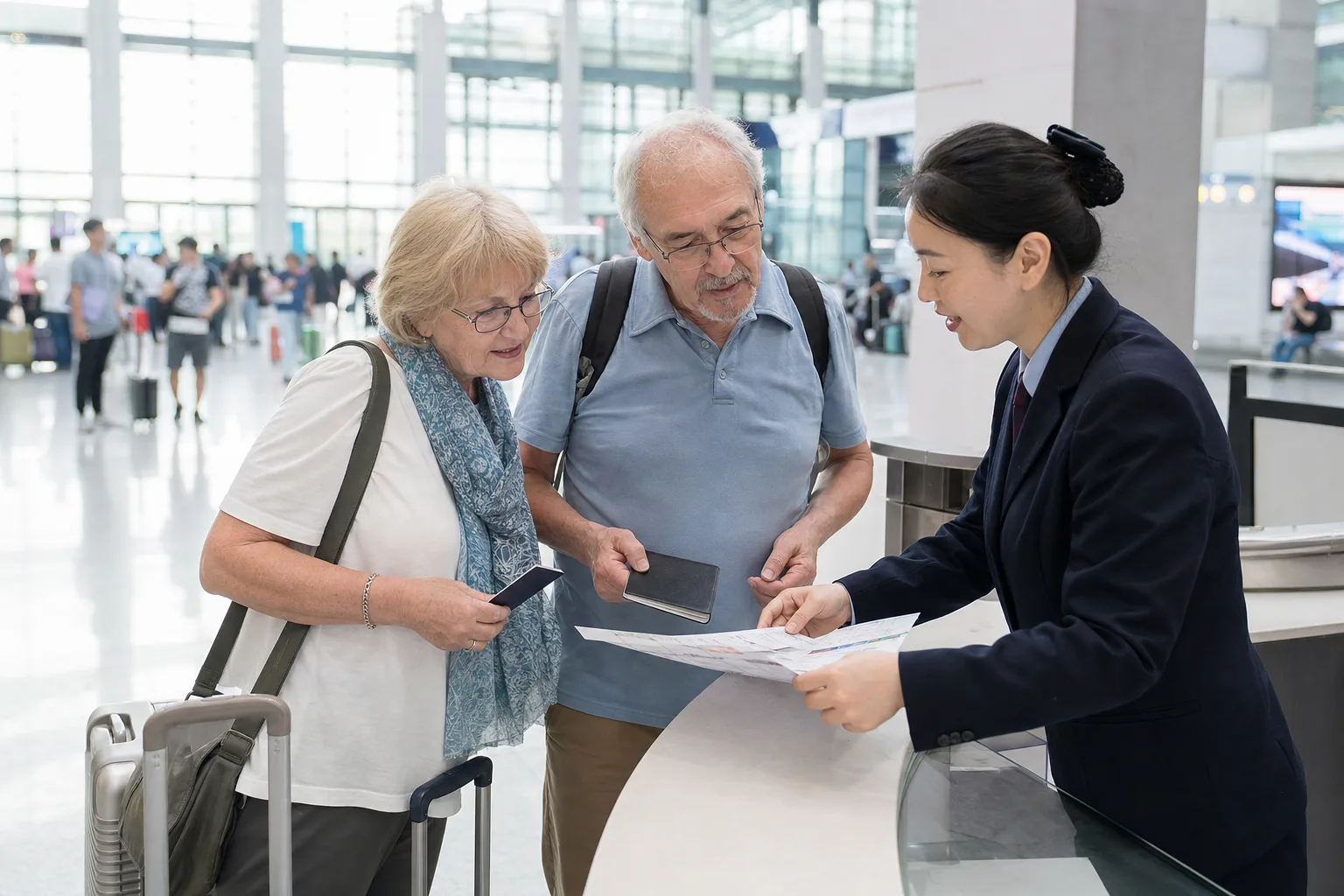
For a foreign visitor, Railway 12306 is the official China Railway ticketing website and app. Shanghai’s current official train guide says tickets can be bought at station counters, authorized agencies, 12306.cn or the Railway 12306 app, and it advises travelers to use the original passport or eligible document for boarding. The same guide explains that e-tickets mean a paper ticket is generally not required for station entry or boarding.
Build in time for the parts no itinerary screenshot shows: a station entrance, security check, finding the right waiting area, boarding-gate timing and the walk to the platform. If identity verification, a ticket issue or a name mismatch needs help, address it at the official counter early. Do not rely on a social-media seller, unofficial message or a stranger offering to “fix” your booking in exchange for a card or passport image.
Change and refund rules can depend on timing and ticket conditions, so use 12306 or the official railway channel for the current policy rather than depending on an old blog post. If the train is important to your onward trip, keep enough margin to make a change without losing a hotel, transfer or evening booking on the other end.
From platform to hotel: plan the meeting point before you lose the station Wi-Fi
If you are using a private transfer, send the confirmed station name, train number, arrival time, passenger count, every large suitcase, children, mobility equipment and hotel address. Ask for the meeting point in plain language. The useful confirmation has an exit or arrival level, a driver-identification method and a message plan if the train is delayed. “Driver will meet you at the station” leaves too much undecided in a large rail hub.
For a taxi or ride-hailing plan, do not begin entering a destination after you have walked outside with luggage. Save the hotel’s Chinese address, choose the railway-station exit where pickup is permitted, and keep a charged phone. For a metro plan, check how many transfers the bags and travelers can realistically handle. A direct car may cost more than the metro but reduce the first-hour stress enough to be the better value for a tired group.
If your hotel room is not ready, ask whether bags can be stored and begin with a nearby lunch, coffee or one short walk—not a full attraction sequence. A reliable station-to-hotel hand-off creates a much better afternoon than a famous sight reached with every suitcase in tow.
Early departures and late arrivals: protect the rail day from the start
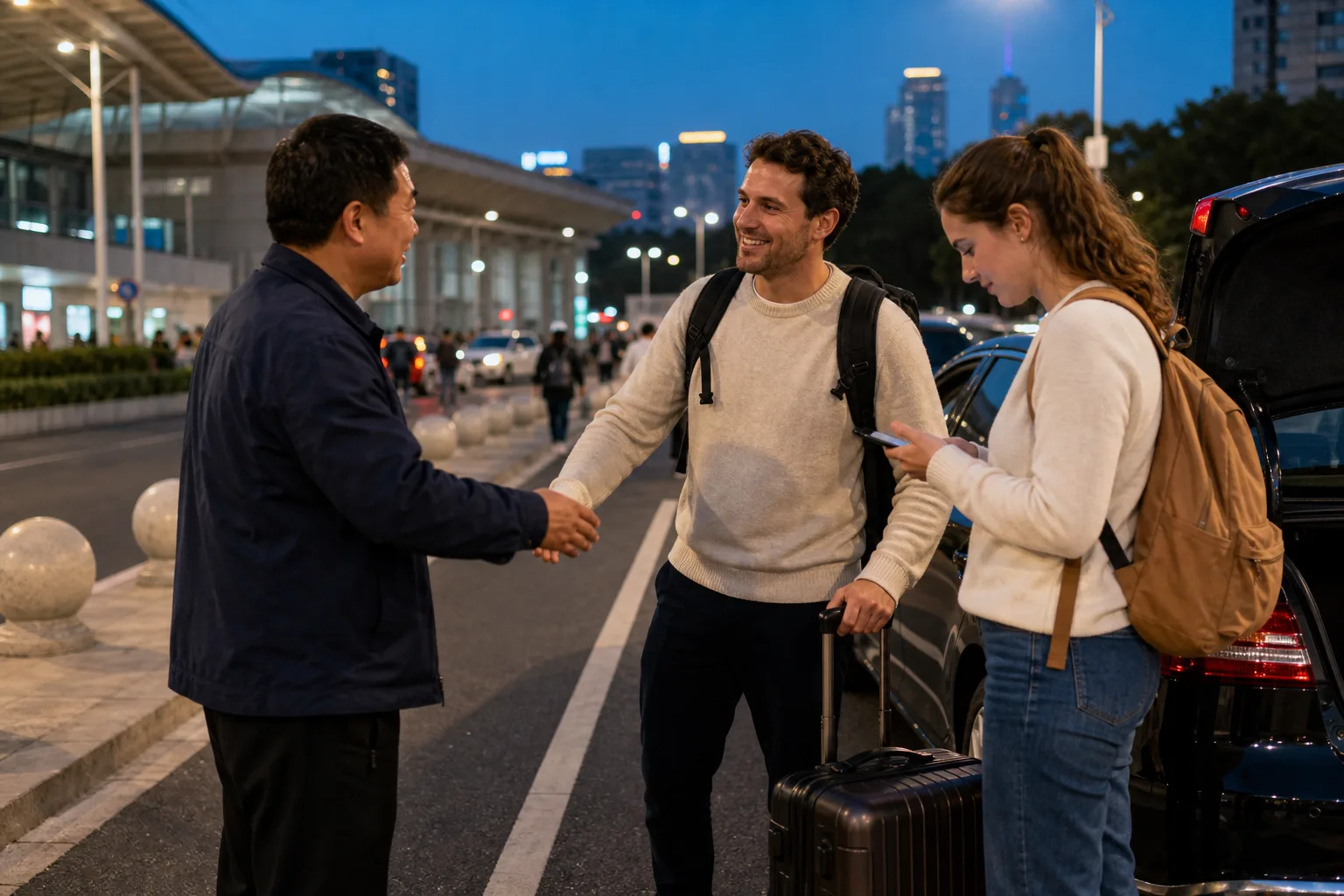
For an early departure, pack and settle the hotel plan the previous evening. Confirm breakfast timing if it matters, the first workable pickup time, the station name and the route to the correct terminal. Keep the morning free of “one last” attraction, shopping stop or long restaurant breakfast. A calm station arrival is worth more than a few extra photographs on a departure day.
For a late arrival, book the station-to-hotel movement before the train departs if the group is tired, carrying luggage or unfamiliar with the city. Keep a payment backup and the hotel contact details, but do not assume the same late-night transport options work equally at every station. If anything changes, tell the hotel or driver through the confirmed channel rather than making a new arrangement with an unverified contact at the curb.
The simplest rule is this: make the train day about the train. Put major sightseeing on a different full day whenever possible. Shanghai, Suzhou, Hangzhou and water towns all become easier when the fixed rail movement is protected rather than treated as an empty gap between attractions.
Practical questions
Which is the main train station in Shanghai?
Shanghai has several major stations, including Shanghai Hongqiao Railway Station, Shanghai Railway Station and Shanghai South Railway Station. The correct one is the station printed on your confirmed train booking, not a generic “Shanghai station” assumption.
Is Shanghai Hongqiao Railway Station the same as Hongqiao Airport?
They are part of the wider Hongqiao transport hub but are separate rail and airport movements. Confirm the exact terminal, allow a realistic transfer and do not treat a rail-to-flight connection as a short walk.
Can foreign visitors buy train tickets in Shanghai?
Yes. Shanghai’s official guide identifies Railway 12306, station counters and authorized channels. Use the original passport or other eligible travel document and check the current official requirements for your exact booking.
How early should I arrive at a Shanghai railway station?
Allow enough time for the station entrance, security, waiting area and platform route, with extra margin for unfamiliar stations, luggage, children, accessibility needs or a ticket question. The ticket time is not the time to arrive at the station.
Should I take the metro or a car from the train station to my hotel?
Choose the option that works for your actual group, bags, arrival hour and hotel location. Metro can be efficient for a simple direct route; a car or taxi often reduces transfer stress after a long journey or with substantial luggage.