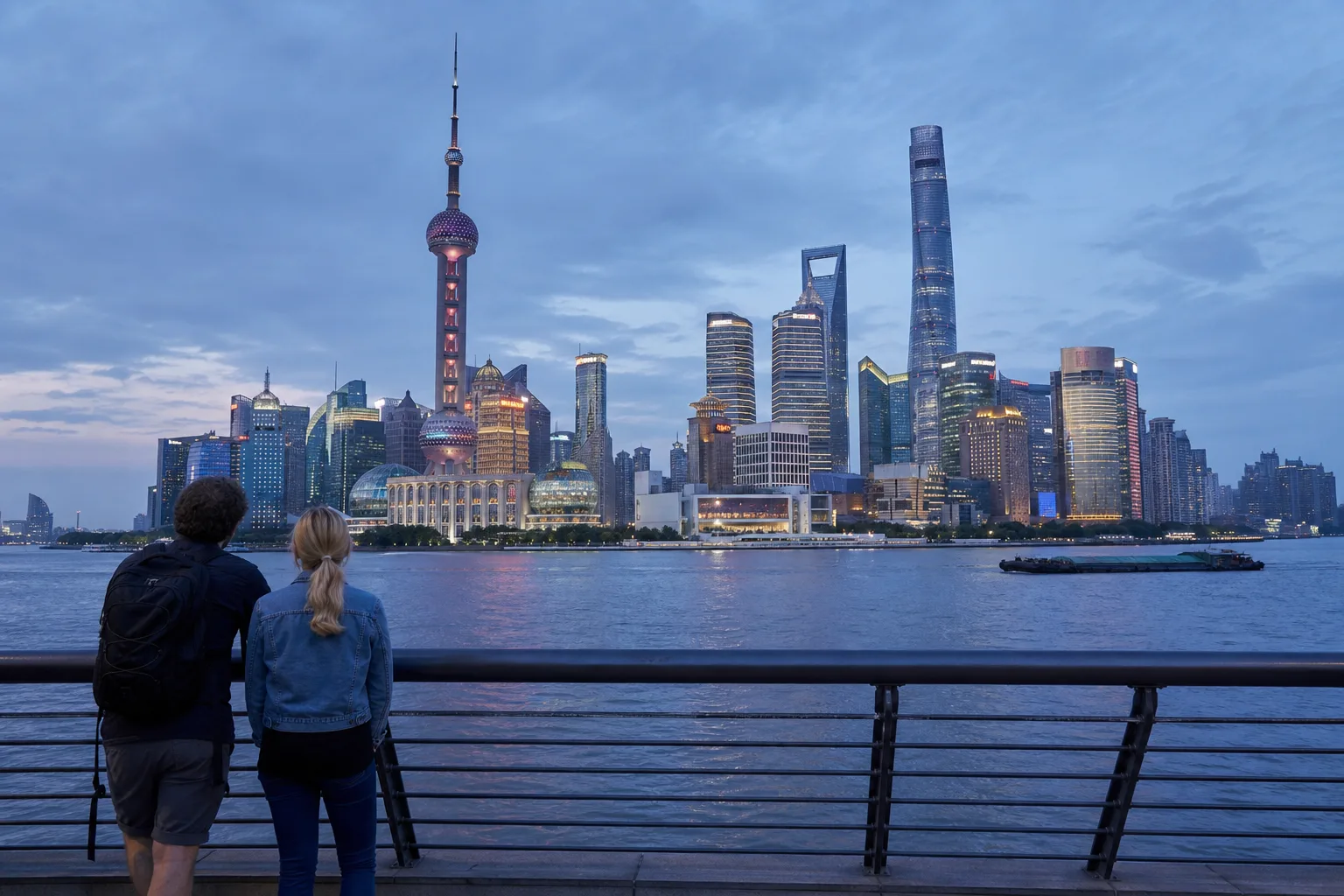
Is two days enough for a first visit to Shanghai?
Two full, usable days are enough for a strong introduction when the itinerary is organized by district. They are not enough for every museum, observation deck, shopping street, temple and nearby water town. The useful goal is to understand Shanghai’s contrasts: an old-city layer, the Bund and Huangpu River, a modern Pudong perspective, and one neighborhood where daily life feels slower than the skyline.
Count a day only when you can leave the hotel after breakfast and return without protecting an airport, cruise or long-distance rail deadline. A morning arrival after an overnight flight may produce a gentle afternoon, but it should not carry the same sightseeing load as a rested day. Likewise, an evening train requires luggage collection and station travel well before departure.
Three full days are more forgiving. The extra day can add depth inside Shanghai, provide a weather backup, or support one regional outing. It should have a clear role. Adding a third day does not mean placing every leftover attraction into one long list.
- Choose two days for a compact first visit focused on Shanghai itself.
- Choose three days when you enjoy museums and neighborhoods, want a slower pace, or want one nearby day trip.
- Add another day separately for Shanghai Disneyland; it should not be squeezed into a city highlights day.
Day 1: Old Shanghai, the Bund and the modern skyline
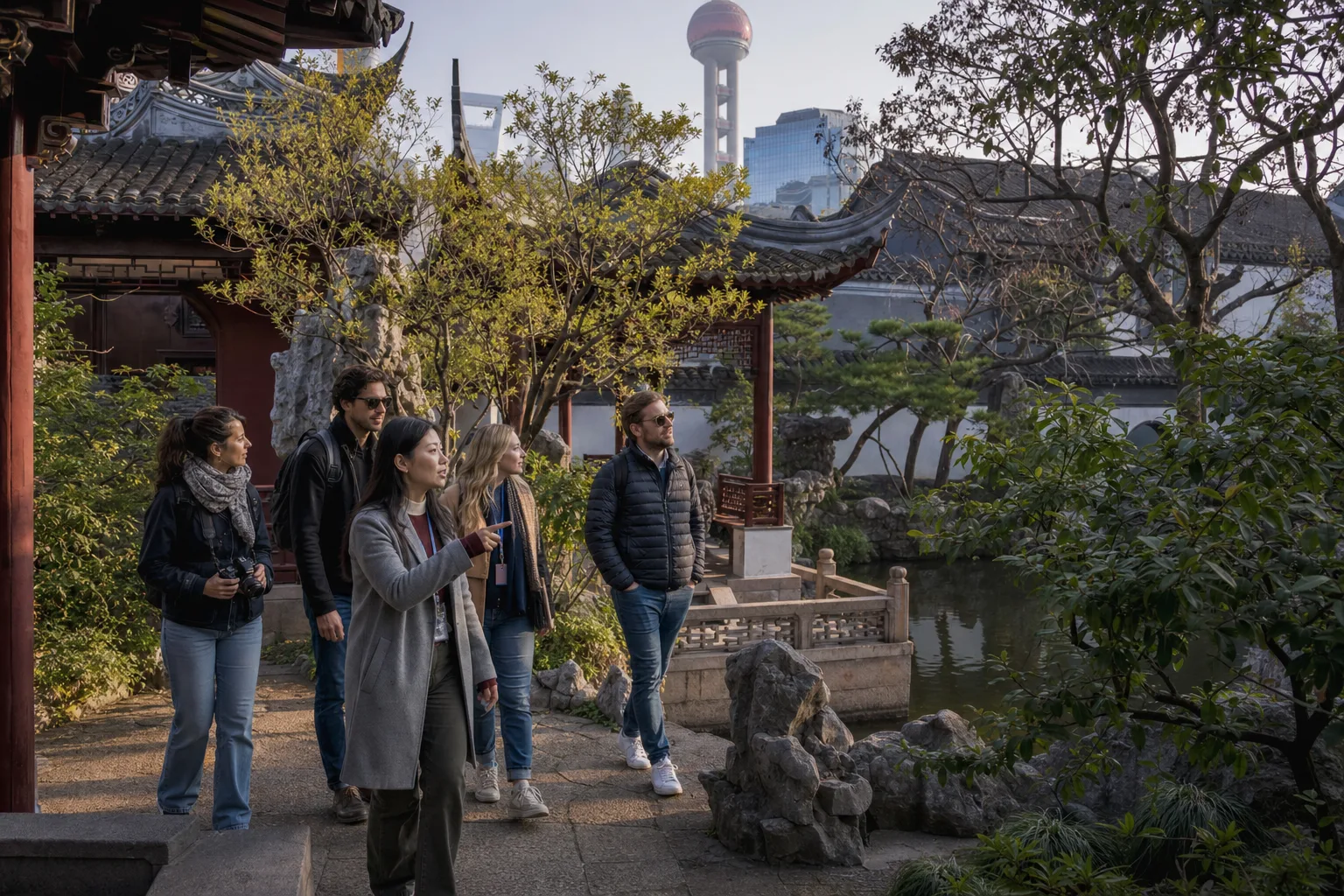
Begin with the old city before the busiest part of the day. Yu Garden can provide a concentrated introduction to classical garden design, while the surrounding lanes reveal a much denser commercial district. The garden and the bazaar are different experiences: allow time for the garden if design and history matter, or use a shorter old-city walk if the group would rather save energy for the riverfront.
Keep lunch between the old city and the Bund instead of driving across Shanghai for a famous restaurant name. Continue to a selected section of the Bund and look at both sides of the river: the historic waterfront buildings explain the city’s commercial past, while Lujiazui shows the scale of its later transformation. A guide can make this contrast useful without turning the promenade into a list of architectural dates.
Cross to Pudong only when it adds a different perspective. One observation deck, a river crossing, or a street-level Lujiazui walk is enough for most first days. Visibility, timed admission and the group’s comfort with heights should decide whether a tower belongs in the plan. Finish near the hotel or an evening booking rather than creating another cross-city transfer after sunset.
Day 2: Neighborhood Shanghai and one cultural anchor
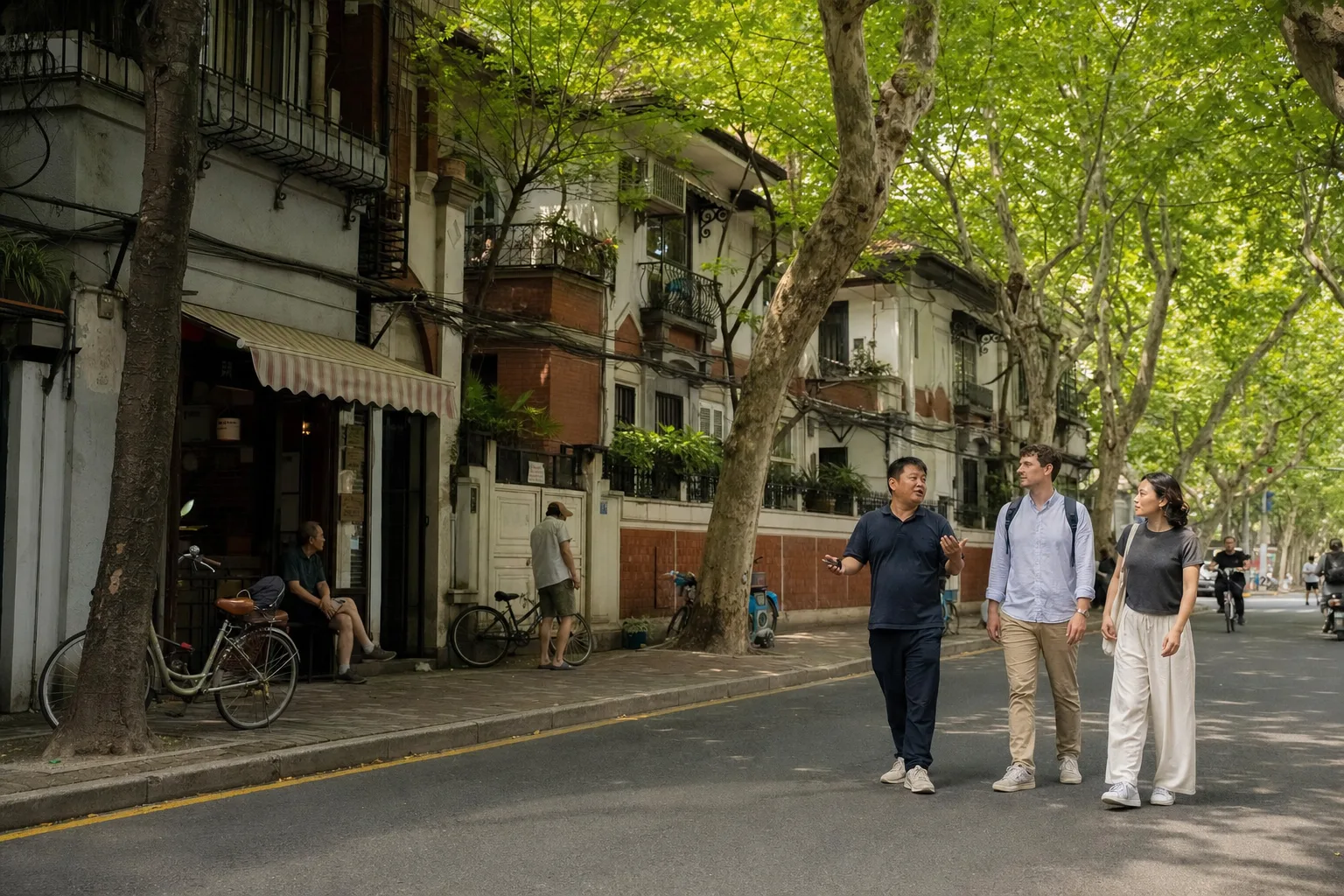
Use the second morning for the former French Concession or another compact historic neighborhood. Plane-tree streets, lane housing, small public spaces and surviving early twentieth-century buildings reward a connected walk. Pick a limited area around the hotel and current interests rather than collecting several social-media street names that require repeated vehicle pickups.
Pair the neighborhood with one cultural anchor. This may be a museum, a historic interior, a temple, a design or art space, or a food-focused experience. Shanghai Museum operates more than one venue, and official visitor notices, closure days, exhibition access and reservation arrangements can change. Check the exact campus and date before using any museum as the fixed center of the itinerary.
Leave the afternoon flexible enough for weather and energy. Xintiandi, Jing’an, the North Bund or a return to the river can make sense depending on where the morning ends. Travelers who want shopping should choose one district that matches their interests; shopping is most satisfying when it replaces a sightseeing block rather than extending an already long day.
What should you do with a third day?
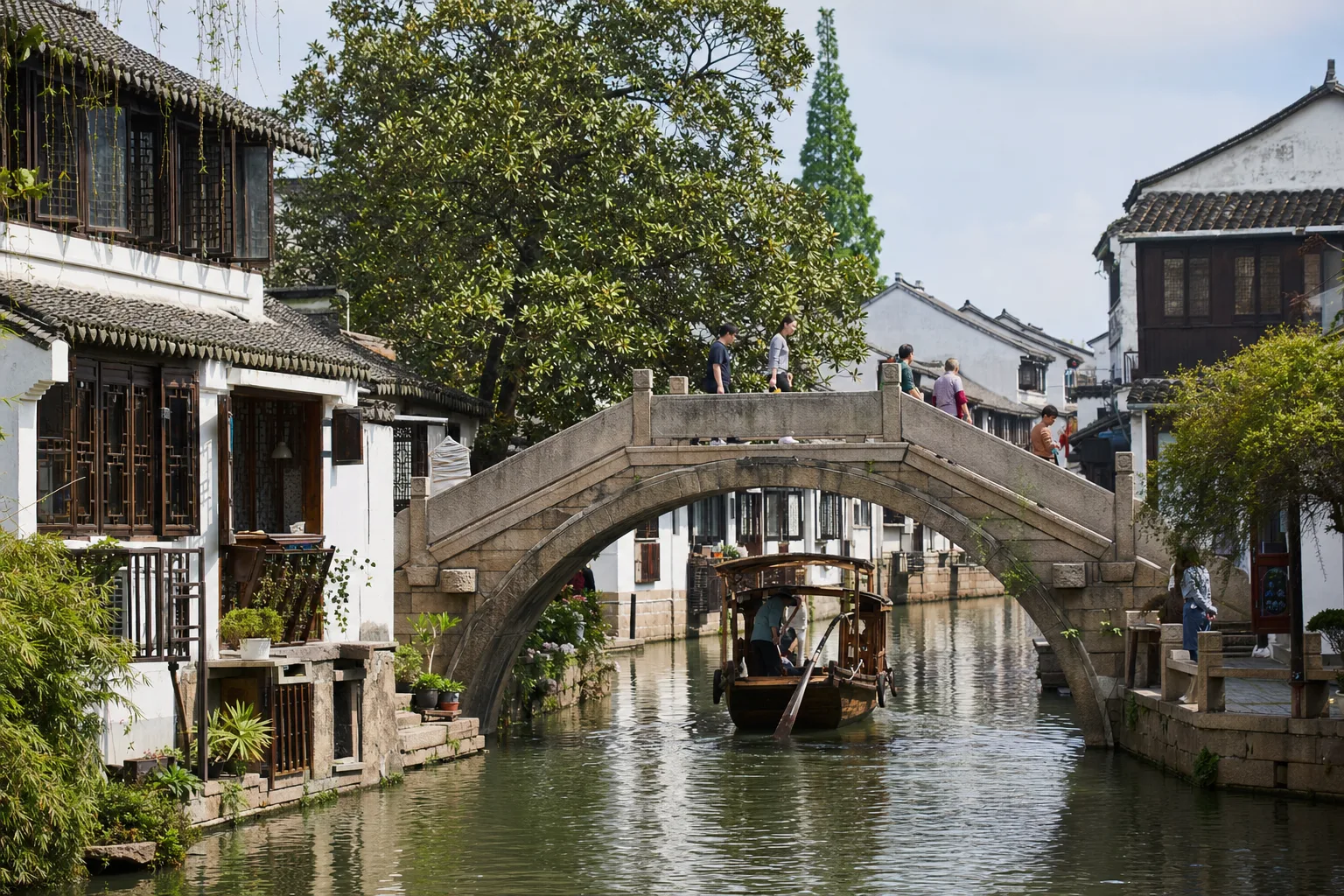
The best third day fills the gap left by the first two. If the city days already included history, neighborhoods and skyline views, Zhujiajiao offers a canal-town contrast while remaining within Shanghai municipality. It can be planned as a focused outing with a protected return, although stone paving, bridge slopes, road time and weekend crowds still need to be considered.
Suzhou is a stronger choice for travelers whose priority is classical garden design and a lived-in canal district. Hangzhou is a larger landscape day centered on West Lake with one additional temple or tea theme. Both deserve a full day and careful hotel-to-station or hotel-to-highway planning. Do not choose between them only by the advertised train duration.
Staying in Shanghai is equally valid. Use the third day for Shanghai Museum East or another major museum, a deeper architecture walk, food, contemporary art, the North Bund, or a slower combination that would have made the first two days rushed. Families, senior travelers and people arriving from a demanding China itinerary often gain more from this city-based option than from another early departure.
- Choose Zhujiajiao for the shortest water-town commitment and an easier Shanghai return.
- Choose Suzhou for classical gardens and an urban canal story.
- Choose Hangzhou for West Lake and a broader cultural landscape.
- Stay in Shanghai for museums, architecture, food or a weather-resilient slower day.
A practical 2-day versus 3-day comparison
A two-day plan works best for travelers staying centrally, beginning rested and accepting that several attractions will remain optional. The two days should feel different: Day 1 follows the historic-to-modern river story, while Day 2 slows down for neighborhoods and one cultural interest. This structure avoids seeing the same skyline from several paid viewpoints.
A three-day plan works better when the group wants more than highlights. It protects against rain or poor visibility, creates space for an important museum, or gives a nearby destination its own day. It is also the safer choice for travelers with children, mobility considerations, long lunches, photography priorities or a strong interest in architecture and design.
- Two days: two city days, one historic-to-modern and one neighborhood-to-cultural.
- Three days, city version: the same two core days plus museums, food, art or deeper neighborhoods.
- Three days, regional version: two Shanghai days plus exactly one of Zhujiajiao, Suzhou or Hangzhou.
- Three days with Disneyland: one Shanghai highlights day, one neighborhood or cultural day, and one dedicated park day.
Hotel location changes the order more than most lists admit
A Bund, People’s Square or former French Concession hotel creates a different efficient route from a Pudong or Hongqiao base. Do not copy the same morning order without checking the starting point. Crossing the Huangpu River or the full width of central Shanghai at peak road times can consume the flexibility that made the plan attractive.
Metro is often efficient for independent travelers with light bags and confidence using a large urban network. A private car becomes more valuable for families, mobility needs, several districts, poor weather or a fixed evening return. It still cannot stop at every historic doorway, garden entrance or promenade viewpoint, so short walks from legal drop-off points remain part of the day.
Keep the hotel name and address available in Chinese, and identify the exact pickup entrance when a property connects to a mall or has several vehicle levels. For a regional third day, compare the complete hotel-to-attraction journey rather than only the train segment. Passport information may be required for rail tickets, and names must match the travel document used on the day.
Reservations, weather and the final check
Check official visitor information shortly before the date. Museum campuses, special exhibitions, gardens, observation decks and popular experiences may use different closure days, identity requirements or timed-entry systems. An old blog post is not confirmation of admission. Keep passports available when the confirmed booking requires them, but do not send sensitive document details through a public contact form.
Shanghai weather changes the best sequence. Clear visibility favors the Bund and high viewpoints; rain may favor a museum anchor with a movable riverfront window; summer heat calls for shorter outdoor blocks and a proper indoor lunch. Severe weather and public-holiday crowds can require removing a stop rather than compressing every remaining activity.
Before confirming the itinerary, write down five facts: hotel, usable dates and hours, traveler count, comfortable walking level, and the one experience nobody wants to miss. Those details produce a more accurate route than a longer attraction list. A good two- or three-day Shanghai itinerary should still work when one optional stop closes or the group needs a slower afternoon.
Practical questions
Are two full days enough for Shanghai?
Yes for a well-organized first introduction focused on Shanghai itself. Use one historic-to-modern river day and one neighborhood-and-culture day instead of trying to cover every major attraction.
Is three days in Shanghai better than two?
Three days gives more flexibility for museums, weather, slower walking or one nearby day trip. It is better when the group wants depth rather than only the principal skyline and historic contrasts.
Should the third day be Zhujiajiao, Suzhou or Hangzhou?
Choose Zhujiajiao for the easiest water-town contrast, Suzhou for classical gardens, and Hangzhou for West Lake. Choose only one and protect the return to Shanghai.
Can Shanghai Disneyland fit into this itinerary?
Treat Disneyland as a dedicated day. In a three-day visit, it replaces the regional outing or the deeper city day rather than being added after central sightseeing.
Do I need a private guide for two or three days?
Not necessarily. Independent travelers can use the metro and official booking channels, while a private guide and car are most useful for contextual explanation, several districts, families, mobility needs or a tightly protected return time.