Build a payment plan before the first taxi or coffee
Shanghai is increasingly easy to navigate with a foreign card or a mobile wallet, but a good travel day should not depend on a single payment method. A phone can lose data, a bank can decline an unfamiliar transaction, a small shop may prefer a QR-code payment, and a transit decision is inconvenient when you are standing at the gate with luggage. Bring a working physical card, arrange one mobile-payment route you understand, and keep a modest amount of RMB for small or awkward moments. That mix is simpler than trying to make every payment method work at once.
The most useful preparation happens at home: tell your card issuer that you will travel, make sure the card is enabled for overseas and contactless purchases, check whether your phone can receive verification messages, and download any app you intend to use while you still have dependable support and Wi-Fi. Do not treat a successful app setup as a guarantee that every payment will clear. Bank controls, merchant equipment, connection quality and the exact card can still matter on the day.
For most short visits, you do not need a Chinese bank account simply to buy meals and get around. Shanghai government guidance lists international-card acceptance where the relevant logos are displayed, RMB cash, mobile payments and other options for foreign visitors. The best choice for you depends on what your own issuer and phone will support, not on a viral claim that one app is compulsory.
- Carry one physical international card separately from your phone and main wallet when practical.
- Keep a small amount of RMB for small purchases, tips where appropriate and a failed-app fallback; do not rely on buses to provide change.
- Set up one mobile route before departure, but retain a card-and-cash backup.
- Never give a payment code, card PIN, passport image or verification code to an unofficial helper.
International cards: useful, but read the terminal rather than making assumptions
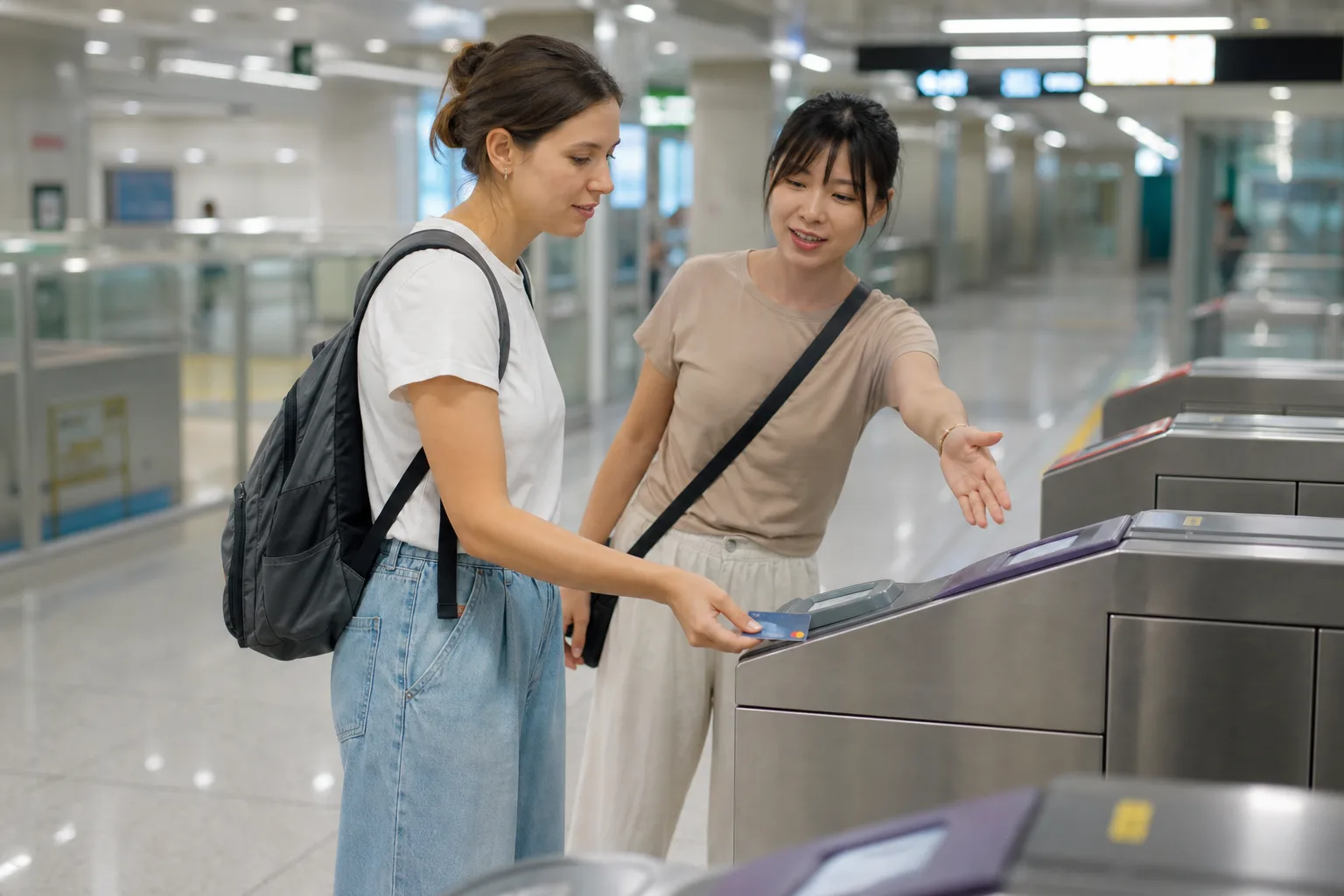
At a shop, hotel or restaurant, look for the accepted-payment marks at the counter or ask before ordering a large meal or adding services. Shanghai’s official visitor guidance says cards issued abroad may be accepted where the checkout displays the relevant payment-network logo. That is more useful than assuming a card will work because another merchant accepted it yesterday. Different terminals, card issuers and transaction types can behave differently.
For the metro, the current official guide says eligible contactless UnionPay, Visa, Mastercard, American Express and JCB cards can use Tap to Ride at gates. It also advises travelers to check that the card or wallet has sufficient available credit and has small-transaction password-free payment enabled. If your bank requires a PIN, blocks overseas transit charges or sends a verification prompt that you cannot receive, use a ticket or another option instead of holding up the gate.
Keep the same card available until a transit transaction has settled. A transport fare may appear later than the moment you pass a gate, and the foreign-exchange rate or issuer fee is determined by your card provider, not by the metro. For a short trip, review your banking-app notifications each evening rather than trying to reconcile every small charge while you are on the platform.
Mobile wallets: set up one route, then keep the job small at first
Alipay and Weixin Pay are common mobile-payment options in Shanghai, and the city’s official payment guidance describes ways for overseas visitors to link an international card. Start with a low-stakes purchase after you arrive: a convenience-store drink, a coffee or a small meal. This lets you discover a verification or card-issuer problem before you are trying to pay for luggage storage, a late dinner or a time-sensitive ticket.
Treat QR payment as a method, not as a reason to abandon normal caution. Confirm the amount on your own phone before authorizing it, use the merchant’s displayed code or terminal rather than a code handed to you in the street, and do not let a stranger take control of your unlocked phone. If an app requests identity verification or card confirmation, complete it only inside the official app and with a secure connection you trust.
Mobile payment can be particularly convenient for restaurants, convenience stores and some transport tools, but it should not be the only thing between you and your hotel. Keep the physical card that funded the wallet with you, and know where your cash is. If the app stops working, it is usually quicker to switch payment methods than to troubleshoot in a queue.
Cash still has a role: make it a backup, not a pile of money
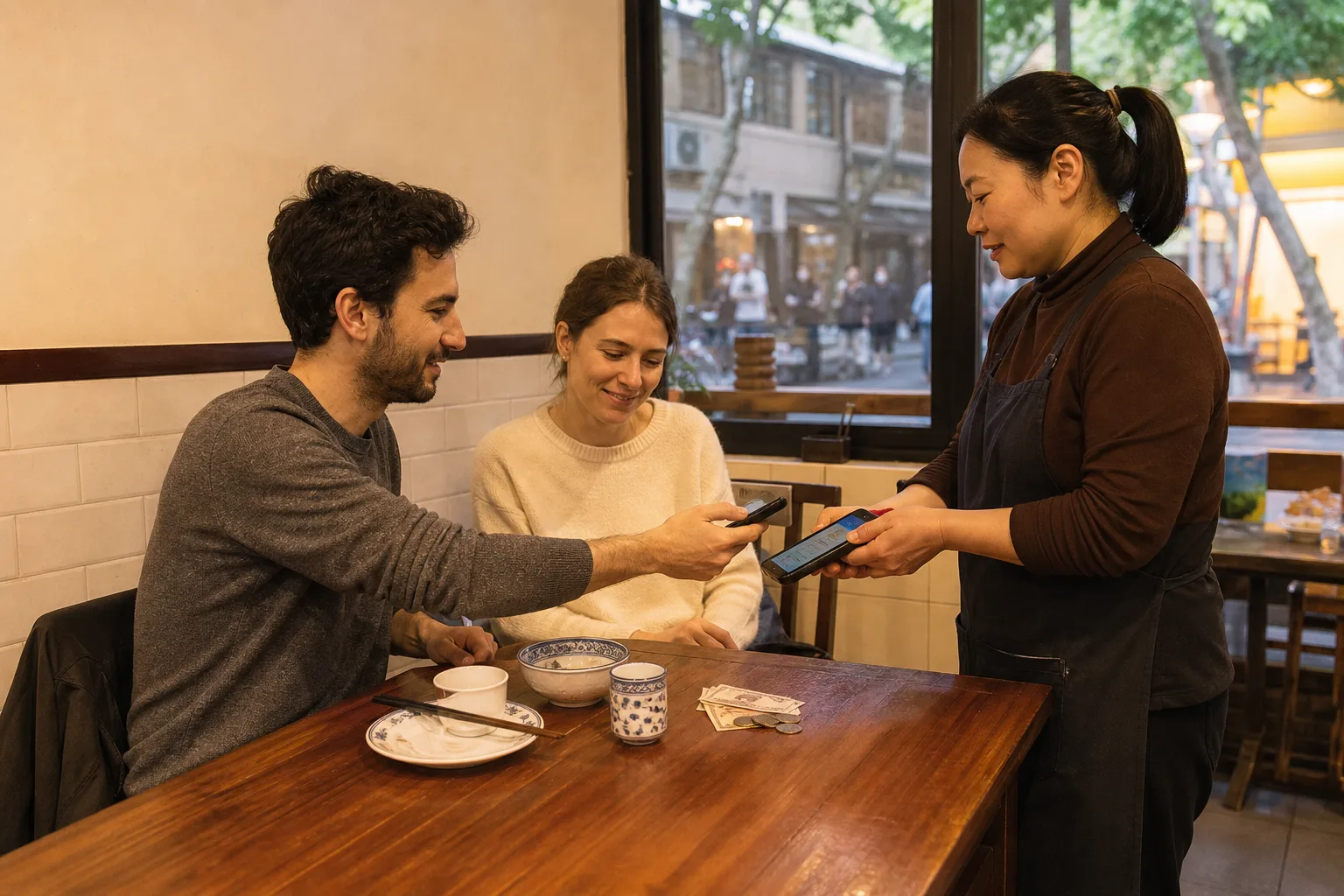
Cash is legal tender and remains a useful fallback for visitors, especially when a phone, card or QR payment does not cooperate. Shanghai’s official visitor information describes both cash withdrawal at machines displaying the appropriate network marks and currency exchange at qualified locations. The same guidance notes that ATM limits and your own card issuer’s overseas limits can apply, so check the terms of your particular card before you fly.
Withdraw or exchange only the amount that makes your first days comfortable. Large sums increase the inconvenience if a wallet goes missing, and many visitors will still use card or mobile payment for most larger purchases. Request or keep some smaller notes where possible. They are more practical than a single large note for a low-cost snack, a locker, or a transport contingency.
Do not assume that every bus can make change, and do not depend on a driver or a small seller to break a large note. The current official bus guide specifically advises passengers using cash to prepare small change. If you rely on cash for an evening, put enough aside before the rush hour rather than searching for an ATM when you are tired and far from your hotel.
Metro, buses and ferries: choose one clear way through the gate
For a first day, make one choice for each transport mode and use it consistently. On the metro, an eligible contactless card may be the simplest option for some visitors; a single-journey ticket is a sensible fallback; and the official Metro Daduhui route or supported wallet services can suit travelers who have completed their setup. The wrong move is mixing several entry methods without understanding how you will exit or transfer.
Shanghai Metro fares are distance-based. The official guide lists a starting fare of 3 yuan for journeys up to 6 km, then additional distance increments, but travelers should use the station’s current fare display or ticket machine for a specific trip. At every station, service centers have card-payment terminals for domestic and international cards, according to the city guide. If an unfamiliar gate rejects your card, step aside and ask at the service center rather than repeatedly tapping the same card.
For buses, the choices may differ from the metro. The official city guide says foreign cards and physical transport cards can be used on buses, while transport QR options are available through named apps and services. Keep your first bus ride simple: board with a ready payment method, do not expect a driver to troubleshoot a phone setup, and take a screenshot of your hotel’s Chinese address before you leave Wi-Fi.
Hotels, private drivers and tickets: confirm the amount and what it includes
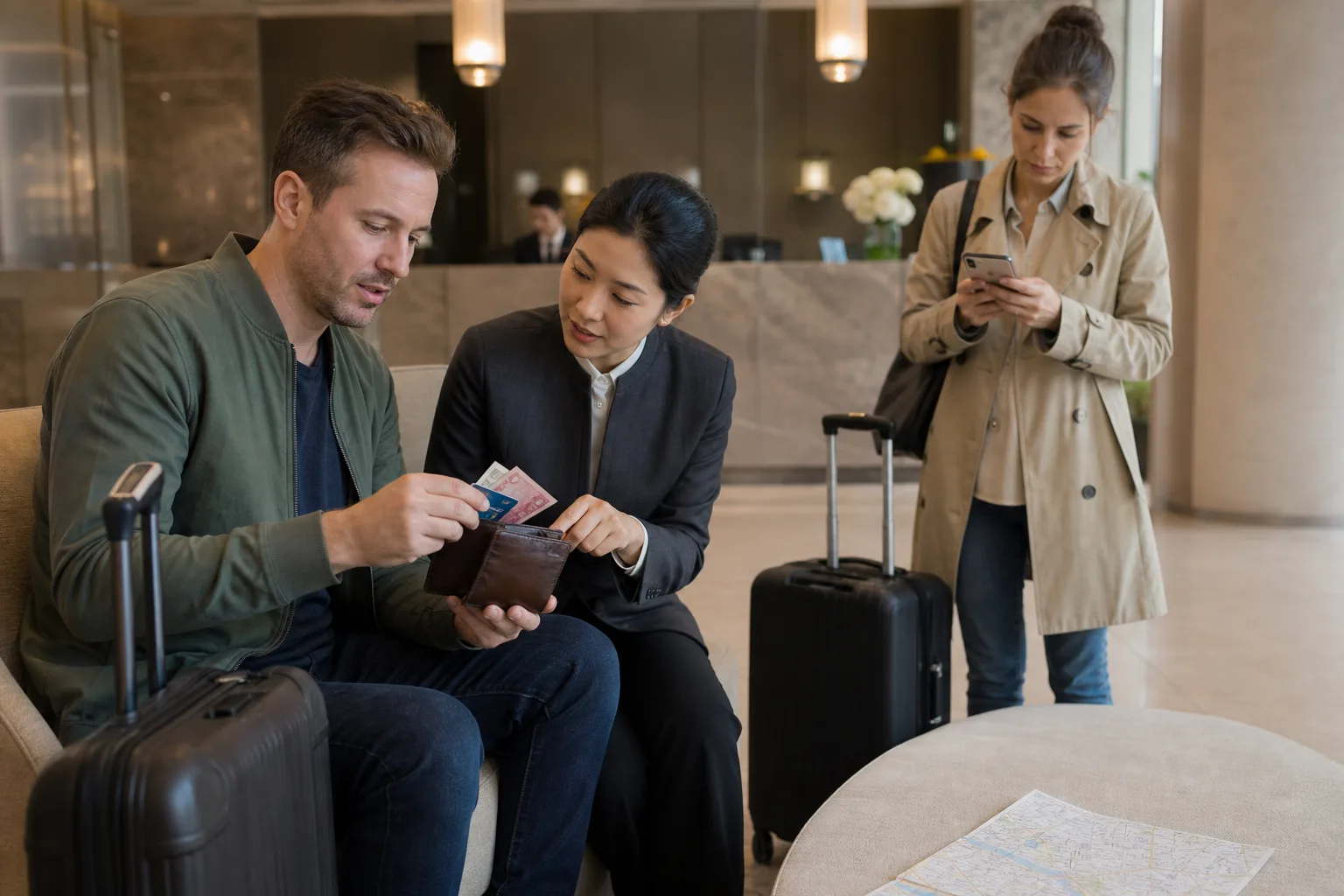
Before you confirm a hotel, airport transfer, guide service, attraction ticket or private car, ask what currency is quoted, what is included, when payment is due and whether a card, payment link or cash is accepted. A good travel provider should state the service components clearly; a message that only names a total is not enough for you to compare options. If a vendor’s payment instructions change unexpectedly, pause and confirm through the original booking channel.
For a hotel deposit or a card pre-authorization, ask what will be held, when the amount will be released and whether the cardholder must be present. Keep the final receipt and the card used for the booking until the stay has closed. Exchange-rate differences and pending bank entries can be normal, but an unclear charge should be raised with the hotel while you still have the reservation details available.
Use a private driver or guide as a travel service, not as a payment workaround. Confirm the agreed route, waiting time, included tickets, meal arrangement and meeting point first. If you need help with a payment or ticket purchase, ask for a transparent explanation and a receipt; do not share banking-app passwords, PINs or one-time verification codes.
A calm first-day payment checklist
On arrival, do not test everything in the first ten minutes. First, reach the hotel with the method you arranged. Then confirm that your physical card works with one small purchase, check your phone has data or a dependable connection, and try the mobile-payment method you intend to use only if you have time to resolve a prompt. Buy a metro ticket or use a supported tap option on a short, unhurried journey before making it the backbone of a busy sightseeing day.
At the end of the day, review transactions in your bank app, put your card and cash in separate safe places, charge the phone, and keep your hotel address and the next day’s reservation details available offline. This is deliberately boring preparation. It is also what lets you enjoy a market, museum or dinner without turning a small payment issue into the story of the day.
If you are planning a private day, share the hotel, dates, group size, luggage, mobility needs and fixed tickets before asking for a route. Payment should support a practical plan; it should not be the last uncertainty after every transport and timing choice has already been made.
Practical questions
Can foreign visitors use credit cards in Shanghai?
Often, where the merchant displays the relevant international-payment logo. Do not assume every counter or your exact issuer will work; carry a second method and ask before a larger purchase.
Do I need Alipay or Weixin Pay to visit Shanghai?
No single app is essential for every visitor. Mobile wallets can be convenient when set up successfully, but an eligible physical card, RMB cash and metro ticket options give useful alternatives.
Can I use my foreign bank card on the Shanghai Metro?
The official metro guide lists eligible contactless UnionPay, Visa, Mastercard, American Express and JCB cards for Tap to Ride. Check that your own card supports contactless small-value payments and keep a ticket or other payment option available.
Should I carry cash in Shanghai?
Carry a modest RMB reserve as a fallback, particularly for small purchases or a failed mobile/card transaction. Avoid carrying more than you need, and keep small notes where practical because buses may not make change.
What should I do if my payment app or card fails?
Use your backup card, cash or a ticket option rather than repeatedly trying the same transaction in a queue. Check your bank or app later on a secure connection, and ask the station service center or merchant what payment methods they can accept.