Do not reserve everything: reserve the things that shape the day
A good Shanghai itinerary has a few protected commitments and plenty of room around them. The commitments are usually the places that use real-name entry, timed admission, a scarce evening departure or a journey that would be difficult to recreate at the last minute. The space is for a river walk that runs long, a restaurant that looks inviting, a shower after a flight, a weather change or simply the time it takes to understand a neighborhood. Booking every hour in advance makes a city feel less certain, not more certain.
Start with your fixed arrival and departure, then identify one or two experiences that would genuinely disappoint you if they sold out. A special exhibition, a popular museum time slot, a performance, a skyline observation deck, a river cruise or a family attraction may deserve advance action. A walk through the former French Concession, an hour on the Bund, a meal in a broad district or browsing a market normally does not need the same treatment.
Rules, release dates, entry documents, operating hours and cancellation terms can change. Use the venue’s official visitor channel or a clearly identified authorized channel for the final decision, and save the booking confirmation, exact entrance and original ID requirements before you leave the hotel. A general travel article can help you decide what to check; it should never replace the specific venue’s current instructions.
- Protect one essential timed entry or evening event per day, not three competing ones.
- Keep the arrival day light unless a confirmed evening plan is the reason for the trip.
- Use the exact name and ID document that the ticketing channel requests, then bring that document.
- Save the confirmation offline with the entrance, time, cancellation rule and a practical route from your previous stop.
Museums and special exhibitions: check the exact visit, not only the building name
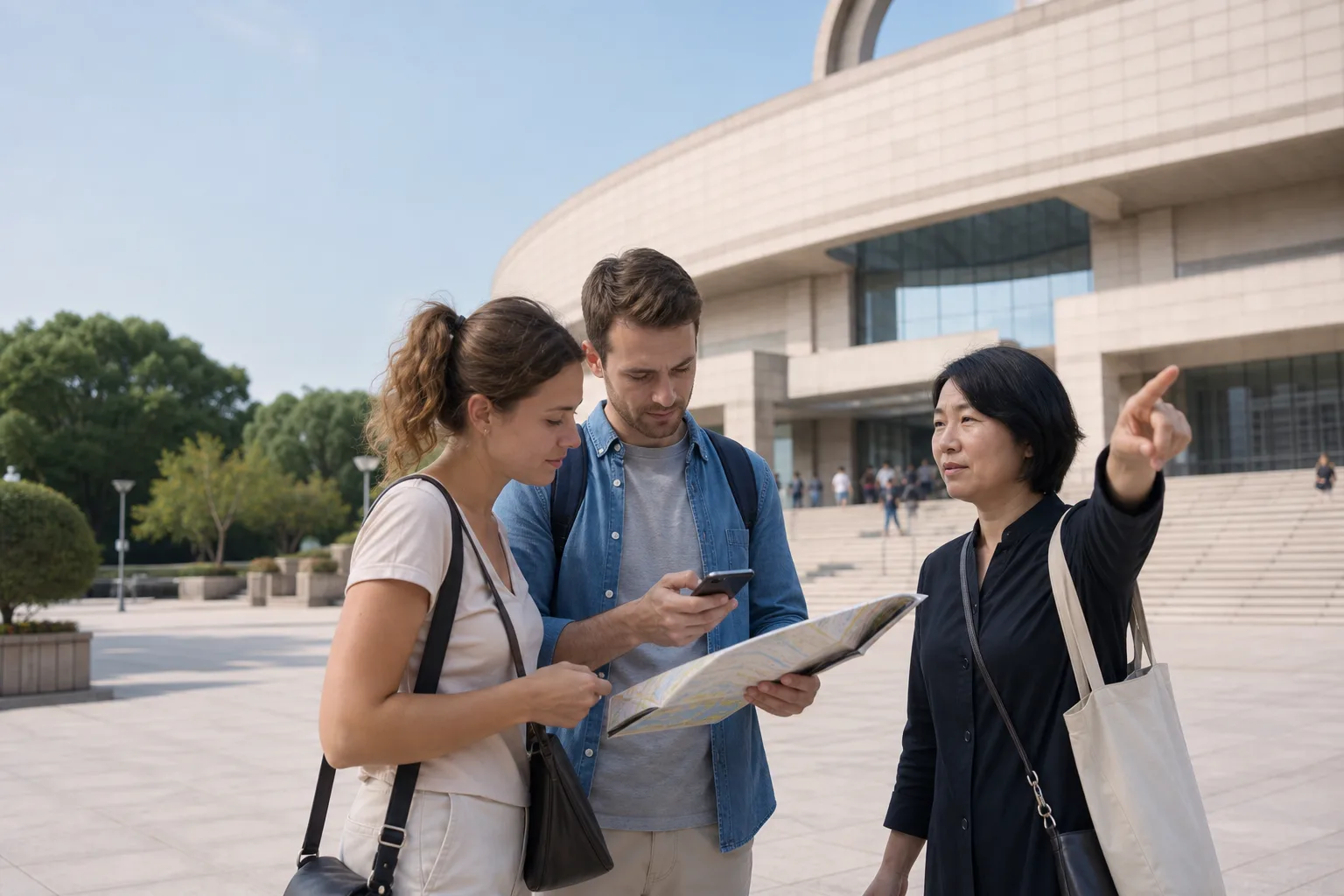
Shanghai museums are not interchangeable stops. A museum’s permanent collection, a special exhibition, an east-side or central branch, and a school-holiday date can all have different rules. Check whether your intended visit is free or ticketed, whether a reservation is required, what name or document is used for admission, when the final entry is allowed and which entrance is actually used. Then allow time for security, a bag check and finding the correct gallery rather than treating the printed ticket time as the moment the visit begins.
Shanghai Museum has introduced an overseas-visitor reservation channel for individual travelers on its English-language website, according to the city’s official visitor update. That is helpful context, but do not generalize it to every Shanghai museum or exhibition. The current official listings for museums and galleries are a better place to begin when you need the recognized ticketing channel and visitor guidance for a specific venue.
Do not pair a major museum with an unrelated timed attraction across the city unless the travel time has been tested. A strong cultural day might be one museum, lunch in the same broad area and one nearby walk or river view. It is more satisfying to have time for a room that catches your attention than to leave halfway through because another booking is already approaching.
Observation decks, cruises and evening shows: book the experience that needs a clock
An evening experience is often worth booking when it has a fixed boarding, curtain or entry time. A Huangpu River cruise, a performance or a specific observation-deck slot changes the route before and after it: where you eat, how early you leave the previous stop, how you handle rain and how you return to the hotel. Treat it as the anchor of the evening, not as one more item squeezed after a full city day.
Before confirming, check the exact date, boarding or arrival point, identity rules, duration, weather policy, cancellation terms and final transport plan. A cruise boarding pier and an attraction entrance can be farther from the nearest vehicle drop-off than a map suggests. A theatre may have a firm late-entry rule. A view can be excellent in changing weather, but only if you are willing to accept that an outdoor photograph is not guaranteed by a ticket.
Give the event a buffer. Plan a meal nearby or finish the afternoon in the same district. If the plan relies on crossing the river at the last minute, changing clothes at a distant hotel and arriving at a strict boarding point, it is too fragile. The best Shanghai evening is one you can reach calmly enough to enjoy.
Airport, rail and private transport: reserve the hand-offs, then leave the city day open
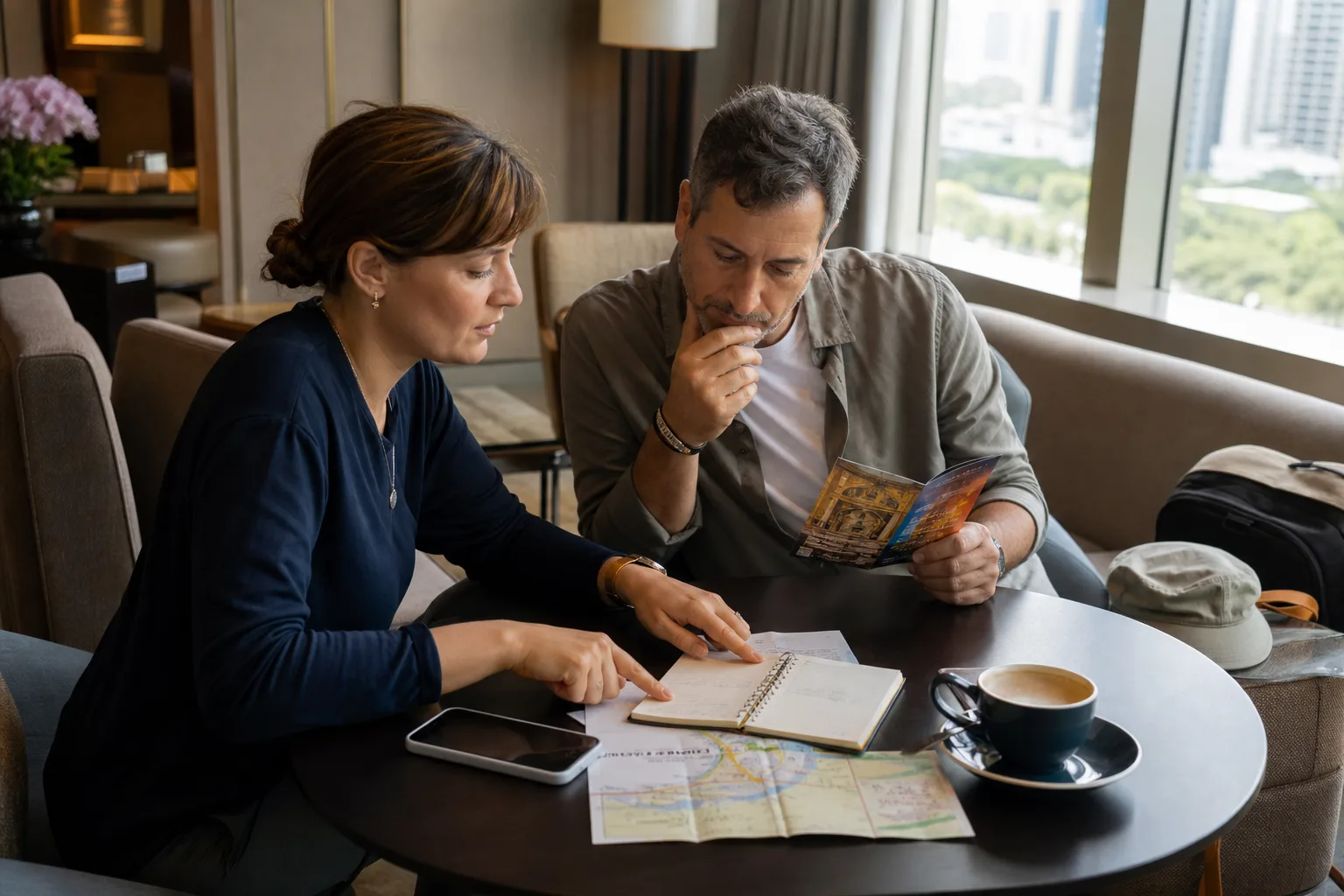
Transport reservations are most valuable when they remove a difficult hand-off: a late airport arrival, an early departure, a group with substantial luggage, a family needing a child seat, a traveler with reduced mobility, or a rail departure that cannot be missed. State the flight or train number, terminal or station, hotel address, traveler count, luggage and any fixed requirement. A vague “airport pickup” is not enough information to plan a reliable meeting.
For a day trip to Suzhou, Hangzhou or a water town, the transfer choice shapes the entire day. High-speed rail can be efficient, but the useful comparison is door to door: hotel-to-station movement, ticket collection or entry requirements, luggage, platform time and the final local connection. A private car can remove some hand-offs, but it still needs a realistic pickup point and return buffer. Reserve the transport when it is genuinely time-sensitive; do not add distant sightseeing before or after it simply because a map shows one more attraction.
Keep the first and final day conservative. Flight delays, immigration, baggage, traffic and room availability can change the energy of arrival. On departure day, one small nearby activity is better than a non-refundable cross-city ticket that turns luggage and traffic into the main memory of the trip.
Restaurants: reserve for the meal you care about, not every meal you will eat
A restaurant reservation makes sense when the meal itself is a priority: a celebratory dinner, a small dining room, a specific cuisine, a group, a special dietary requirement or a limited evening before a performance. For ordinary lunches, booking too far ahead can force you to leave a neighborhood just as you are enjoying it. Let the day decide between several credible places in the same area instead.
When you do reserve, confirm the exact restaurant location, date, time, party size, child-chair or accessibility requirement, dietary notes, cancellation policy and how long the table is held. A famous name can have branches in different districts, and a reservation message can be useless if it does not identify the street. Save the Chinese address if a driver or ride-hailing service will be involved.
Build your meals around route logic. A lunch near a museum protects the afternoon. An early dinner near a cruise pier or theatre protects the evening. A long cross-city trip for an online recommendation may be worthwhile on a food-focused day, but it should not be disguised as a small detour inside an already timed itinerary.
Avoid false certainty: tickets do not solve weather, crowds or energy
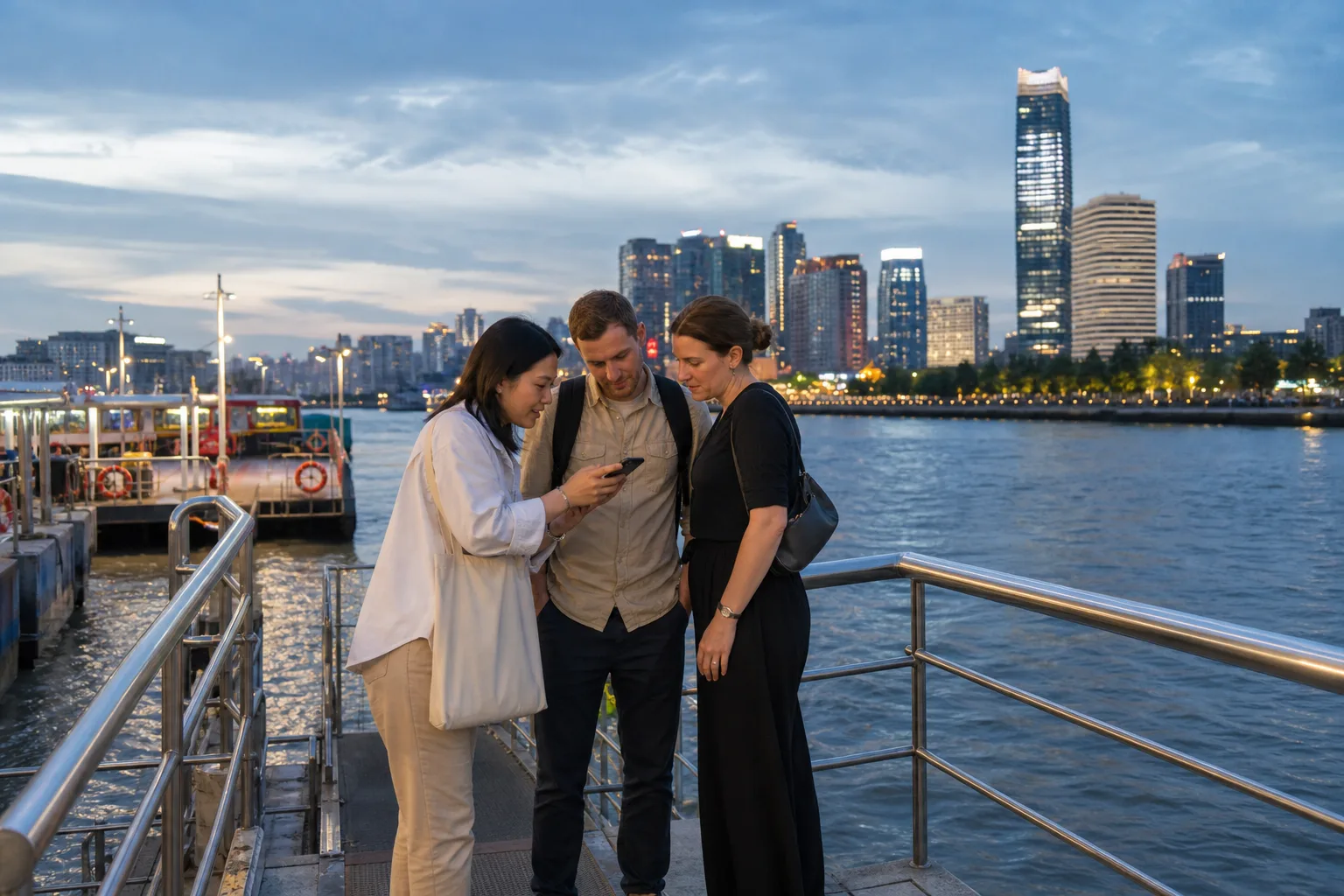
A confirmation number confirms only what it says. It does not guarantee a clear sky, a short queue, an uncrowded promenade, a smooth taxi ride or the physical energy to keep adding stops. Use each reservation to simplify the day: place it beside compatible activities, set a realistic end point and decide the backup you would still enjoy if conditions change.
For outdoor-heavy days, choose one indoor alternative in the same broad area. For a family or an older traveler, leave seated breaks and toilet stops unreserved but intentional. For a first visit, resist reserving every famous landmark simply because availability appears. The city is better understood through a connected sequence than through a phone full of confirmations.
Keep a simple record: booking reference, venue’s official link, time zone, entrance, original document required, paid amount, cancellation deadline and a screenshot stored offline. This is especially useful if the phone loses service or a companion is carrying the tickets. It also makes it much easier to spot an accidental duplicate booking before it becomes a card dispute.
A simple booking order for a better Shanghai trip
First reserve the fixed transport you cannot afford to miss: flights, a genuinely useful airport hand-off and any time-sensitive rail connection. Second, reserve one essential cultural or family experience per full day if its official channel currently requires it. Third, add the one evening experience you most care about. Only then consider a special restaurant. Everything else should earn its place by being in the same area and by making the day better rather than busier.
Before paying, read the change and cancellation terms, verify the URL or official channel, and make sure the date is Shanghai local time. Never send card PINs, bank passwords, passport scans or one-time verification codes to a person who contacts you outside the booking channel. If an arrangement involves several components, ask for a clear written outline of what is included and what remains subject to venue confirmation.
If you want a private itinerary that includes booked entries, send the dates, hotel, traveler count, interests, mobility notes, fixed tickets and any restaurant or evening commitments. The useful result is a day that connects those facts with breathing room—not a promise to reserve every attraction before its current policy has been checked.
Practical questions
What should I book before visiting Shanghai?
Reserve only time-sensitive items that matter to your trip: fixed transport, a must-see timed museum or exhibition, a performance, cruise, observation deck, family attraction or special restaurant. Leave ordinary walks, meals and neighborhood time flexible.
Do Shanghai museums require reservations?
Some do, and rules can differ by museum, branch, exhibition and date. Check the specific venue’s current official visitor page for entry time, ticketing channel, original ID requirement and entrance.
How far in advance should I book Shanghai attractions?
There is no universal window. Check the official channel once your dates are firm, especially for weekends, school holidays, special exhibitions and limited-capacity experiences. Avoid buying through an unclear reseller merely because it shows earlier availability.
Should I reserve a Huangpu River cruise?
Reserve when a particular cruise time is central to your evening, then allow buffer for the boarding point, weather and return transport. Do not plan several cross-city timed activities immediately before it.
Should I book all meals in Shanghai?
No. Reserve only meals that are genuinely important, such as a celebration, a small restaurant, a group dinner or a dietary requirement. Flexible meals help the rest of the day stay connected and enjoyable.