How to enjoy Shanghai food without turning every meal into a checklist
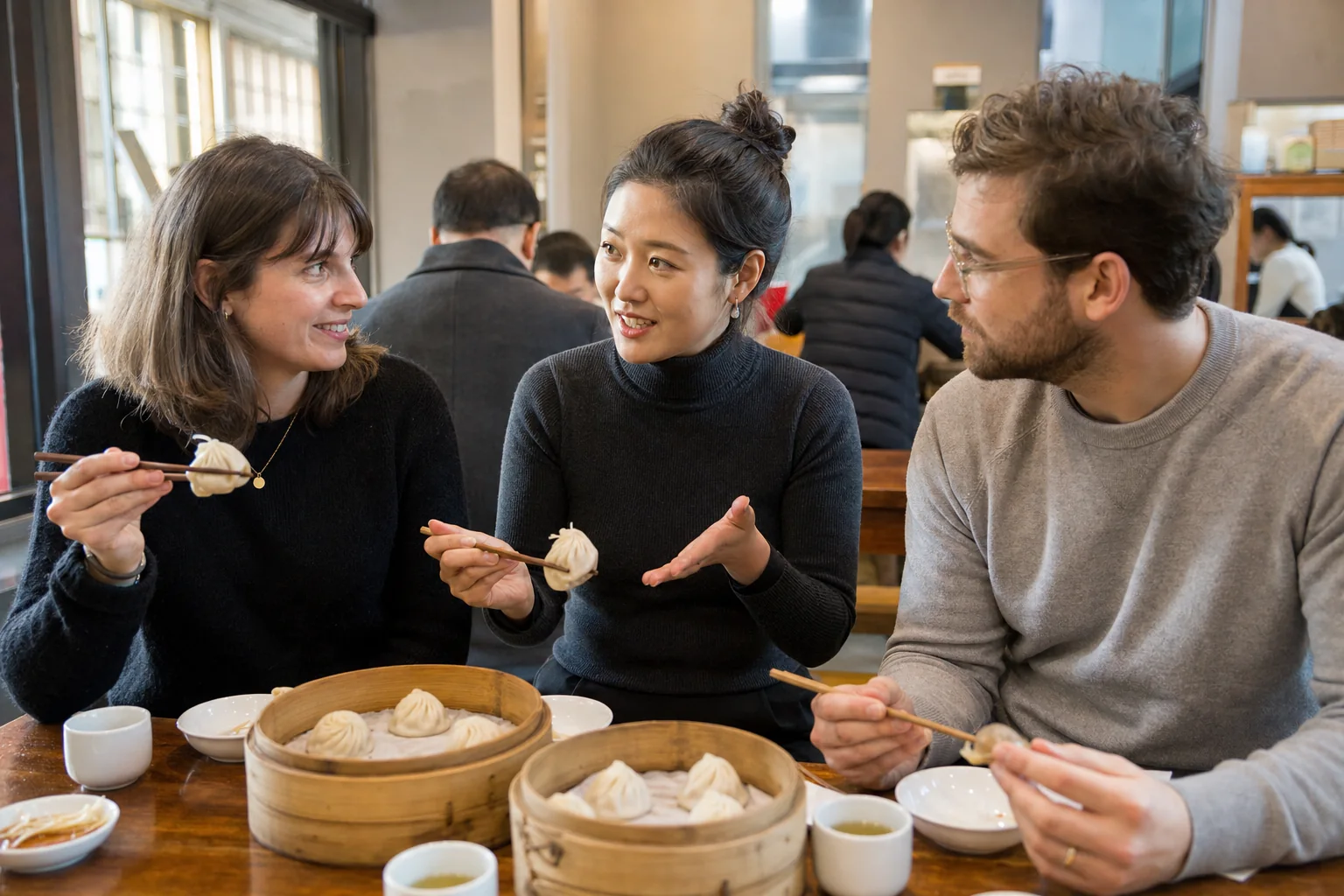
Shanghai rewards travelers who use food to understand the city rather than trying to collect every famous dish in forty-eight hours. A bamboo steamer of xiaolongbao can be a quick breakfast; a shared benbang lunch can explain the local sweet-savory preference; a market snack can show a different rhythm of daily life. Those experiences need different times, appetite and neighborhoods, so they should not all be forced into one overfilled tour day.
For most first visits, choose two or three food moments with different roles: a dumpling breakfast or late-morning snack, one seated Shanghai-style lunch, and an optional evening snack or market walk. Leave space for a normal meal, water and the rest of the day’s sightseeing. The best food memory is usually a dish you enjoyed at a comfortable pace, not the sixth item eaten because an online list said it was essential.
Shanghai’s dining scene is broad. Local noodles, dumplings and homestyle cooking sit beside coffee, regional Chinese cuisines and international restaurants. Start with a clear purpose: are you curious about soup dumplings, a traditional shared lunch, a food market atmosphere, or a restaurant that can manage a specific dietary need? The answer determines the most useful area and time of day.
- Breakfast or a late-morning snack: soup dumplings, pan-fried buns or noodles.
- Lunch: a shared benbang-style meal with two or three dishes rather than a banquet.
- Afternoon: tea, coffee or one sweet treat when the next sightseeing stop is nearby.
- Evening: a relaxed neighborhood meal or market walk only if the return and energy level support it.
What should you eat first in Shanghai?
Xiaolongbao, often called soup dumplings in English, is the natural starting point. They are served in bamboo steamers and hold hot broth, so the experience is as much about patience as flavor. Shanghai’s official tourism material describes xiaolongbao as a classic part of the city’s food culture and traces the famous Nanxiang style to the city’s culinary story. Choose a focused serving when it is freshly steamed rather than treating it as an automatic side dish beside several other heavy foods.
Pan-fried buns, commonly called shengjian, provide a different texture: a crisp base, soft dough and a juicy filling. They are often more filling than they look, especially when paired with noodles or another breakfast item. A useful tasting route normally chooses either soup dumplings or pan-fried buns as the main dough experience, then adds a lighter side rather than ordering two large baskets simply for comparison.
For a seated local meal, look beyond dumplings. Shanghai benbang cooking is often associated with slow braising, glossy red-brown sauces and a balance of soy, sugar and rich ingredients. Red-braised pork belly is one well-known example, but it is not the only answer. A good table may combine one richer braise with vegetables, tofu, fish or a lighter soup so the meal feels like food people actually share, not a display of only the heaviest dishes.
- Xiaolongbao: steamed soup dumplings; best treated carefully because the broth is hot.
- Shengjian: pan-fried buns with a crisp base and a fuller, more substantial bite.
- Local noodles and wontons: a useful lighter or quicker meal when the route has limited time.
- Benbang dishes: shared Shanghai-style cooking, often rich and gently sweet-savory rather than aggressively spicy.
How to eat xiaolongbao without losing the soup
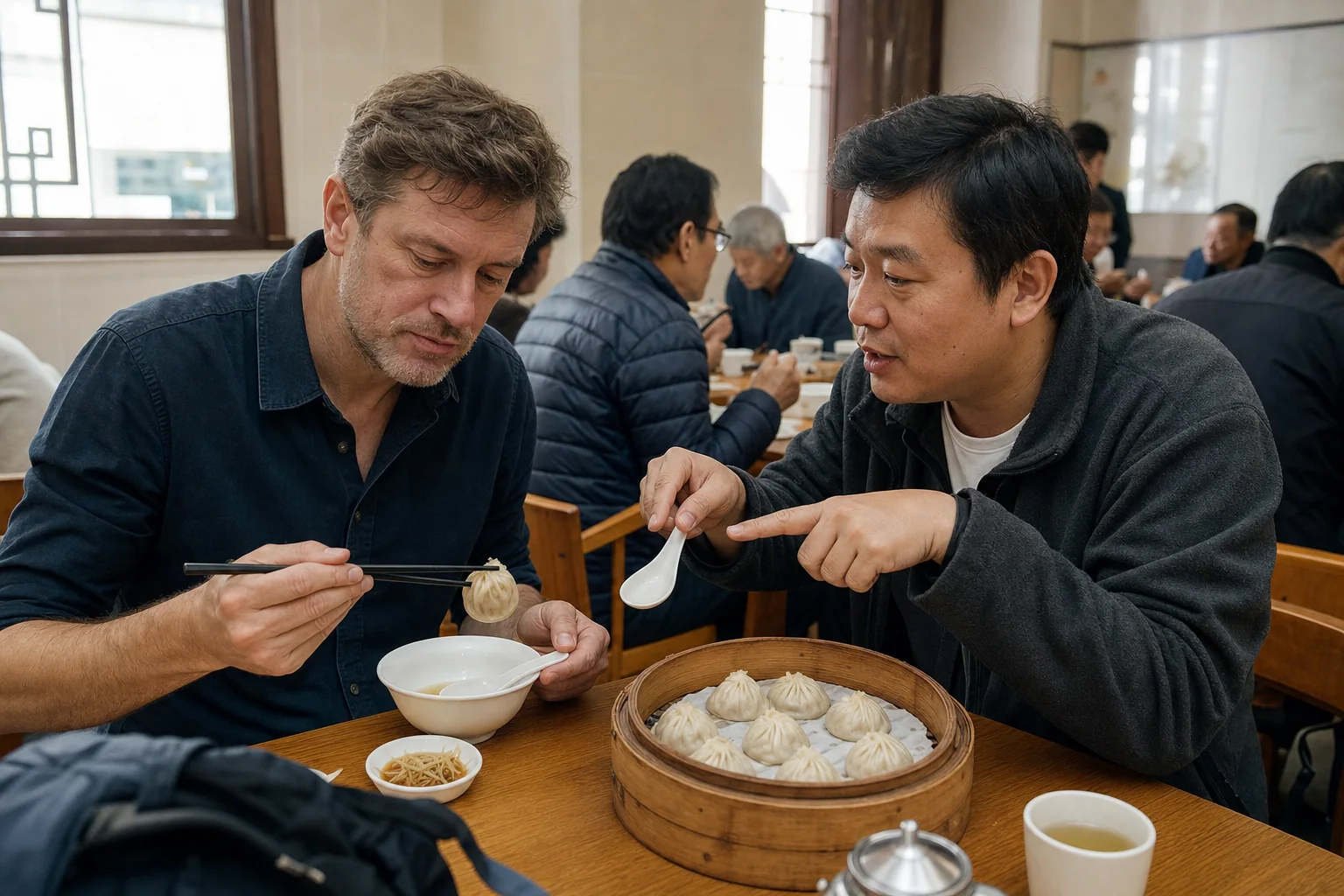
The easy mistake is to pick up a soup dumpling high above the basket and bite immediately. The wrapper can tear and the broth can be very hot. Start by sliding the dumpling onto a spoon, using chopsticks only to support it. If you want ginger and vinegar, add a small amount rather than soaking the dumpling; the aim is to complement the filling, not hide it.
Let the dumpling cool briefly, make a small opening if you are comfortable doing so, and take the first sip of broth carefully. Then eat the rest in one or two bites. Children should be helped with the temperature and spoon. A guide can explain the technique, but the restaurant staff and current cooking temperature are the real reason to slow down.
Do not assume every basket is identical. Filling, skin thickness and soup level vary by style and kitchen. If the group has a shellfish, pork, sesame or other allergy, ask before ordering and do not treat a generic English menu label as complete ingredient information. For strict dietary requirements, choose a restaurant that can confirm the dish clearly instead of relying on a crowded fast-turnover counter.
Try benbang food as a shared lunch, not a solo challenge
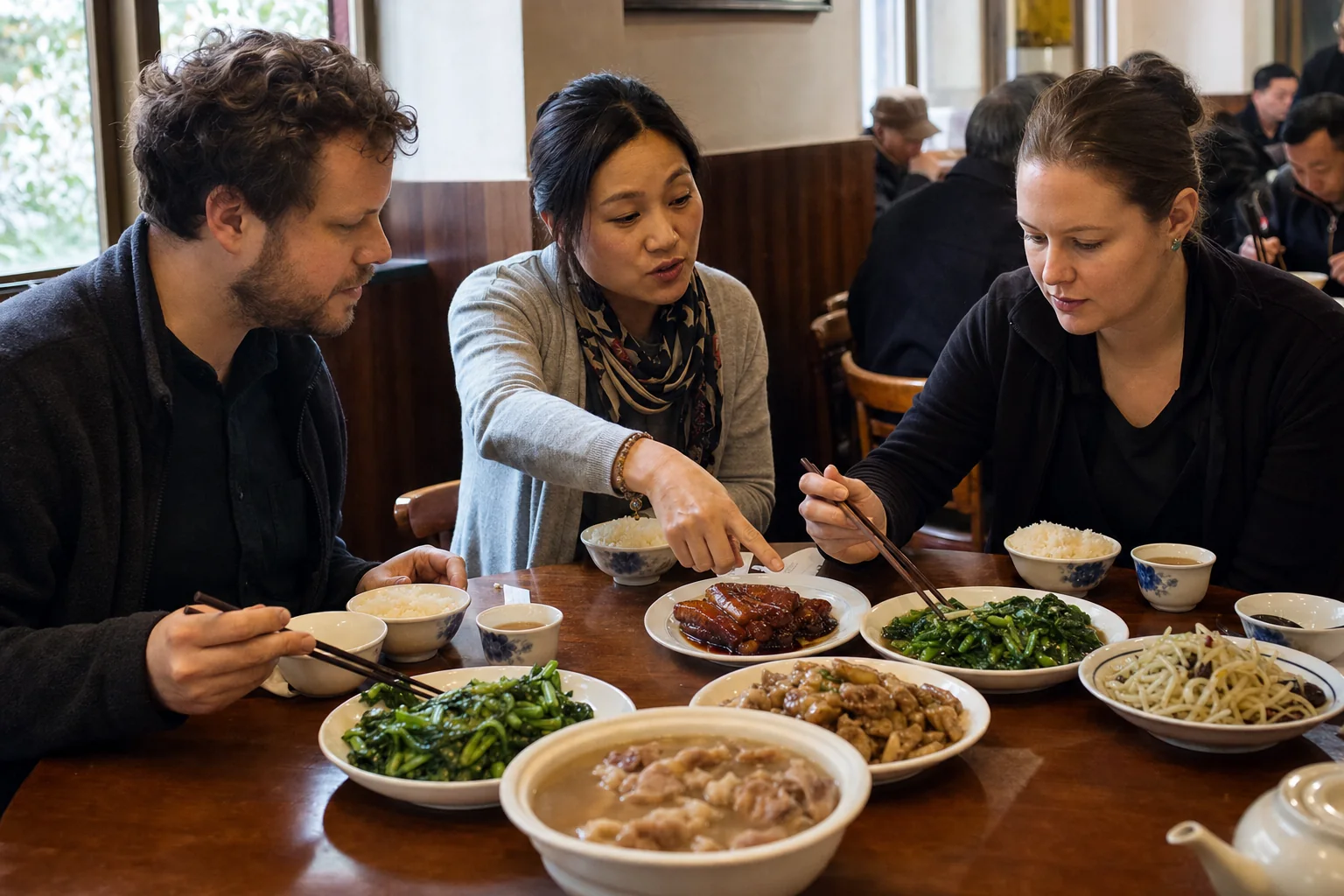
Benbang cuisine is often explained with the phrase “thick oil, red sauce,” referring to slow braising and an appealing red-brown sheen. That description is useful, but it should not be read as a promise that every local dish will be very sweet or very oily. Restaurants and households vary, and menus may include lighter seasonal vegetables, fish, soups and tofu alongside richer pork dishes.
For two travelers, one signature braise plus one vegetable and rice is usually enough to understand the style. For a family or small group, add a second contrasting dish after checking portion size. This is more comfortable than ordering several large meat dishes, particularly when the afternoon includes walking in the old city, a museum or a riverfront route.
If you want to try red-braised pork belly, treat it as a shared taste rather than a test of endurance. Shanghai’s official food material notes the dish’s sweet-savory balance and its connection to both home cooking and restaurant tables. Ask for practical recommendations around the group’s appetite, and state in advance if anyone avoids pork, alcohol in cooking wine, gluten-containing sauces or very rich foods.
Markets and snack streets: use them for atmosphere, not guaranteed menus
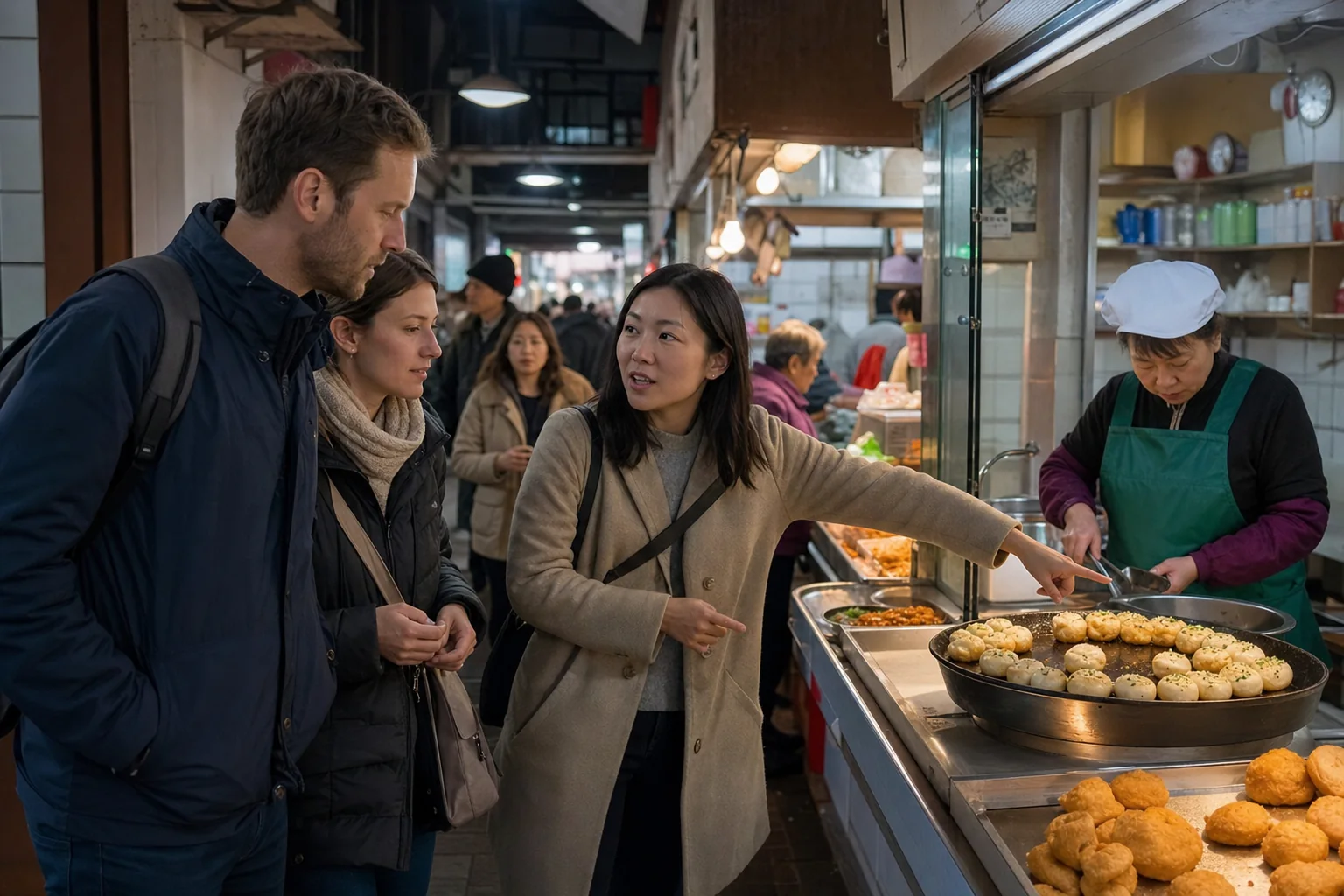
A market or snack street can make a food-focused walk feel more connected to ordinary city life. You may see breakfast counters, cooked-food stalls, fruit, regional snacks and people buying something on the way home. The right approach is observational first: look at how busy the counter is, whether food is being cooked and held appropriately, and whether the group genuinely wants a snack at that moment.
Do not write a whole day around one viral stall or assume a temporary night market will run on your travel date. Vendor lineups, weather policies, operating hours and access can change. Shanghai’s official food updates describe both long-running neighborhood options and seasonal market events, which is a reminder to confirm the current location and opening information close to the visit.
A guide can help explain what is being sold and identify an appropriate stop for the group. They should not pressure travelers to eat something they do not want or claim that a market can safely accommodate every serious allergy. Keep cashless payment, restroom access, hand hygiene and the next transport leg in mind, especially when traveling with children or before a long rail journey.
Build a Shanghai food day around location and appetite
The useful food route is geographically compact. A hotel near People’s Square, the Bund, the former French Concession or Pudong will create different sensible meals and transport choices. Do not cross the whole city for breakfast, return to the hotel, then cross it again for lunch because three different social posts named three restaurants. A food stop is successful when it supports the next neighborhood rather than breaking the day in half.
The amount matters as much as the route. A full breakfast of pan-fried buns, a rich lunch and a market snack may be too much for a day that also includes walking and summer heat. Tell the guide whether food is the main goal or a supporting layer. They can then choose one tasting that feels memorable and leave room for a normal meal later.
- Food-first morning: dumplings or noodles, then a connected old-city or neighborhood walk.
- Culture-first day: sightseeing in the morning, a seated local lunch near the next district, then one lighter afternoon stop.
- Family version: one familiar option plus one local dish, with a real lunch break and no pressure to eat a difficult food.
- Evening version: dinner in one neighborhood, then a short walk or the night plan already confirmed for that area.
Ordering, payment and dietary needs: make the practical request early
Ordering works best when one person in the group can state the priority clearly: “one local dumpling dish, one vegetable, one mild dish and rice” is more useful than “everything popular.” Menus can be large, seasonal and only partly translated. A guide can help interpret the balance of a meal, but final availability and ingredients always belong to the restaurant on that day.
For vegetarians, vegans, halal travelers, guests avoiding pork, people with celiac disease or anyone with a serious allergy, start the conversation before the route is fixed. Sauces, broth, cooking wine, shared woks and garnishes can affect a dish even when the main ingredient appears suitable. Ask the restaurant to confirm, and do not rely on an assumption that “vegetable” means vegan or that “no meat” means no animal stock.
Mobile payment is common in Shanghai, but international travelers should still confirm how a specific restaurant accepts payment rather than assuming every counter works the same way. Carry water, keep medication accessible if needed, and avoid ordering an unfamiliar high-risk food immediately before an airport transfer or a long-distance train. Comfort and clarity matter more than proving how adventurous you are.
When a food guide or private car is useful
A food-focused guide is most useful when travelers want the stories behind dishes, help with ordering, a neighborhood route that fits the hotel or clear communication about pace and dietary preferences. The service should be transparent about what is included: guide time, food purchases, transport, restaurant reservations and any tasting fees are separate items unless the final confirmation says otherwise.
A private car helps when food is combined with districts that are far apart, when a family has children or a senior traveler needs a protected pickup, or when shopping bags and weather make transfers difficult. In dense food streets, the vehicle will still use legal pickup points while the group walks to counters and restaurants. It is a tool for the route, not a promise of door-to-door access at every storefront.
For a tailored request, send the hotel, date, number of travelers, dietary needs, preferred foods, comfortable walking time and the one meal you care about most. That gives the planner enough information to make the food part of Shanghai feel personal without repeating the same generic restaurant list on every itinerary.
Practical questions
What food should I try first in Shanghai?
Start with xiaolongbao or pan-fried buns, then add a shared Shanghai-style lunch if you want a deeper local meal. Choose one main dough dish at a time so the tasting stays enjoyable.
What is the difference between xiaolongbao and shengjian?
Xiaolongbao are steamed soup dumplings with hot broth, while shengjian are pan-fried buns with a crisp base and a more substantial texture. Both can be juicy and hot, but they are prepared and eaten differently.
Is Shanghai food spicy?
Traditional Shanghai benbang cooking is more often sweet-savory and braised than strongly spicy, although Shanghai also has restaurants from every region of China. Ask about spice and sauces when ordering.
Can vegetarians or travelers with allergies enjoy Shanghai food?
Yes, but make the requirement clear before choosing restaurants. Broth, sauces, cooking wine, shared woks and garnishes can affect a dish, so a restaurant needs to confirm the practical details for the date.
Do I need a guide for a Shanghai food tour?
No. Independent travelers can use maps and restaurant information, while a guide is most useful for ingredient context, ordering help, dietary communication and fitting food stops into the real sightseeing route.