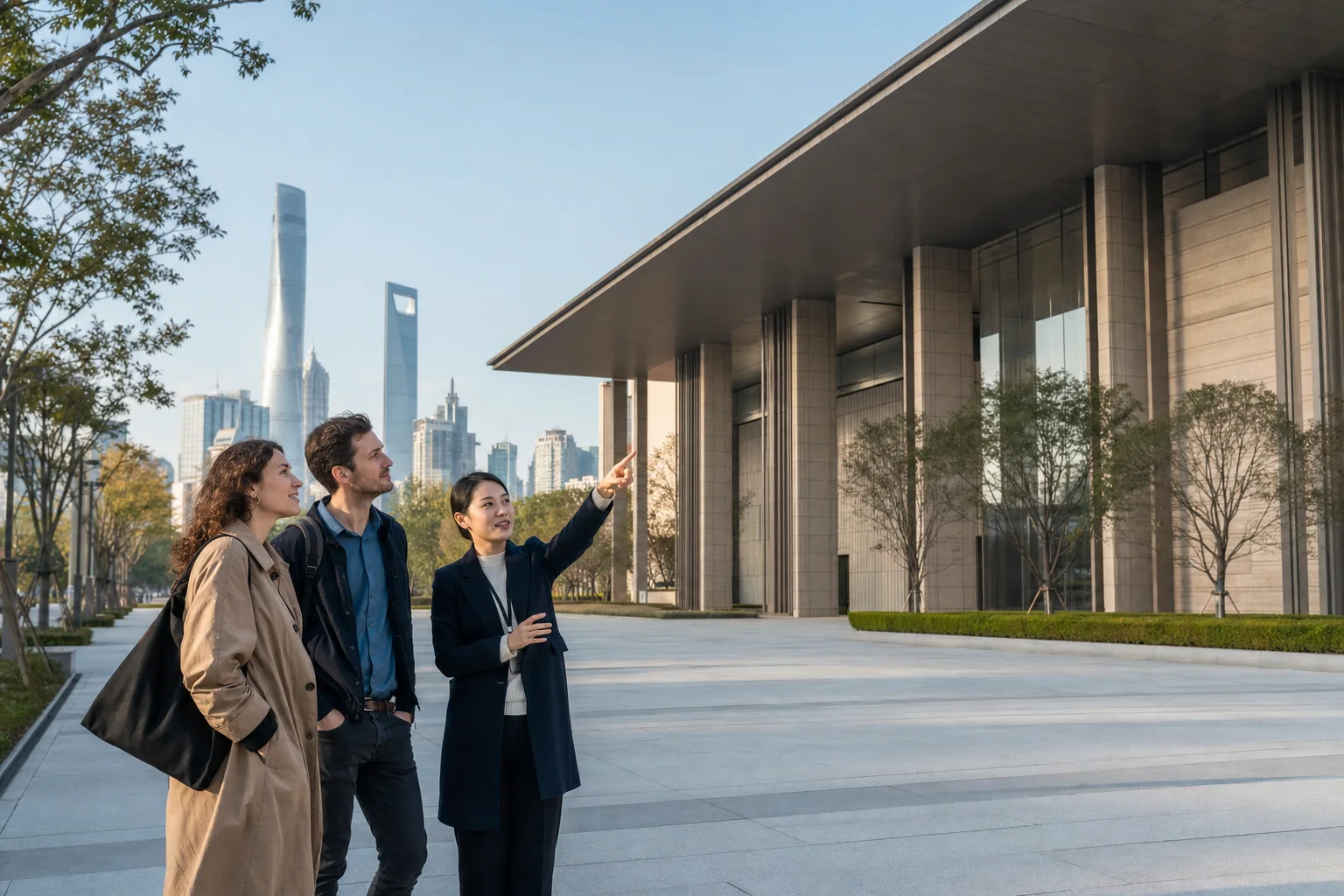
Is Shanghai Museum East the right museum for your Shanghai day?
Shanghai Museum East is a strong choice when you want Chinese art to be the main cultural anchor of a Pudong day, rather than a quick indoor stop between skyline viewpoints. The permanent displays give visitors room to focus on bronze, ceramics, sculpture and other collections without treating the visit as a checklist. It works especially well for travelers who have already seen the Bund or are staying on the Pudong side of the river.
It is less convenient when you have only a short central-Shanghai window and your hotel, dinner or onward train is on the Puxi side. Shanghai Museum also operates a People's Square branch; that location can fit a compact central day better, while the East branch gives a different scale and a more spacious Pudong sequence. Choose one branch for a first visit rather than trying to cross the river simply to claim both.
The practical question is not which museum is best in the abstract. Ask what the rest of the day needs to do. If you want a calm cultural morning followed by Lujiazui, the riverfront or a restaurant nearby, East is logical. If the priority is People's Square, Nanjing Road or a former French Concession afternoon, the central branch may reduce backtracking. Gallery content, special exhibitions and entry arrangements can change, so make the final choice against the official information for your travel date.
- Choose East for a longer Pudong cultural block and a quieter change from skyline sightseeing.
- Choose People's Square when your day is centered on Puxi and you need a shorter cross-city sequence.
- Do not schedule both branches as fixed stops unless museums are the main purpose of the day.
- Treat temporary exhibitions, interactive spaces and event days as separate planning decisions.
Entry, identification and opening information: check the current official page
The museum's current official visitor page lists Shanghai Museum East at No. 1952 Century Avenue in Pudong. It states Wednesday to Monday opening from 10 am to 6 pm, with last entry at 5 pm, and Tuesday closure except national holidays. Individual visitors are currently admitted without an advance reservation after security, using a valid original identity document; international visitors should carry the passport they will use for entry.
That is useful planning information, not a promise that every visit will be frictionless. Special exhibitions, interactive areas, peak-period crowd control, weather-related roof-garden closures and museum operations can create separate conditions. A timed ticket or a different procedure may apply even when general individual entry does not require booking. Check the official page in the days before your visit, then keep the museum contact or confirmation accessible on the phone.
Allow time for the correct entrance and security screening rather than placing a strict appointment immediately afterward. For groups of 20 or more, the published visitor guidance requires advance arrangements. Travelers with an accessibility need, a wheelchair, a child's stroller, large luggage or a tight pickup time should state it early so the day can be designed around the actual handoff instead of an assumed entrance.
- Carry the original passport or other accepted identity document, not only a phone photo.
- Verify the date-specific opening time, closure day and any exhibition ticket rule directly with the museum.
- Use the published individual entrance and security process; do not follow unverified social-media directions.
- Keep the next vehicle pickup flexible because security and gallery traffic can vary.
How much time should you allow inside?
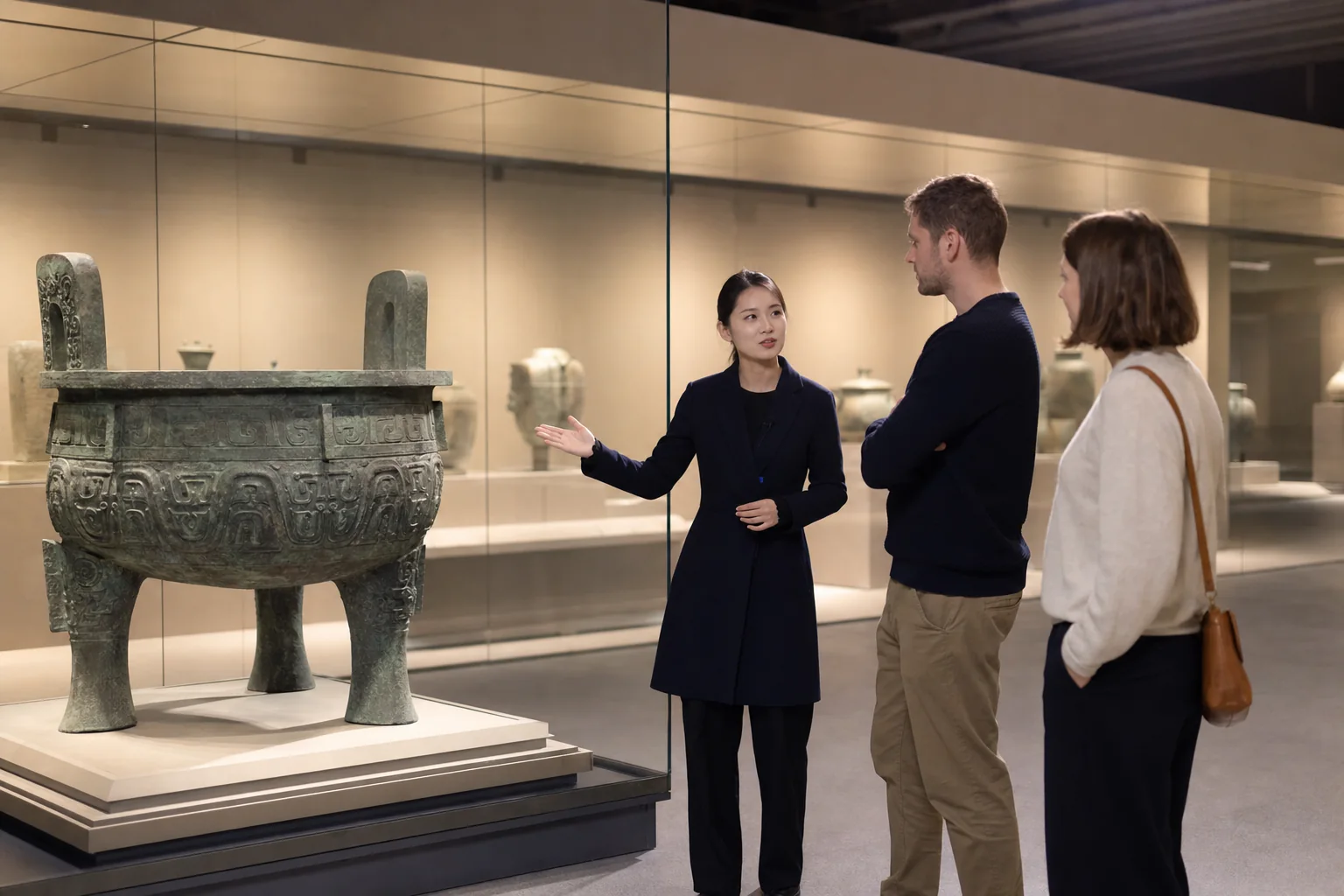
For most first-time visitors, allow two to three unhurried hours rather than assuming a quick forty-minute pass will explain a large museum. Pick one or two collection themes before you arrive: early bronzes, ceramics, sculpture, painting and calligraphy, or Shanghai and Jiangnan history. This gives the visit a story and keeps the group from spending the final hour tiredly scanning room after room.
A shorter visit can work if your aim is simply to add one serious cultural stop to a skyline-and-river day. In that case, choose a known gallery or a confirmed temporary exhibition and leave before fatigue turns the rest of the itinerary into a rush. A longer visit suits guests who are already interested in Chinese material culture, traveling in rain or heat, or using the museum as the primary purpose of the day.
Observe the gallery rules on the day. Do not touch displays; photography conditions can vary by exhibition; and staff directions always take priority. If you want an audio guide or an English-language interpretation service, confirm the current availability and price with the museum rather than assuming an older article or online comment applies.
Build the museum into a Pudong route, not a cross-city detour
Museum East sits away from the Bund-side waterfront, so the cleanest day usually stays in Pudong for a meaningful stretch. Start at the museum, take a measured lunch or coffee break, then choose one connected second layer such as Lujiazui public space, a riverfront walk or one confirmed viewpoint. The exact sequence depends on weather, hotel side, ticket time and how much standing the group enjoys.
Avoid the common mistake of booking a central-Puxi breakfast, a museum entry in Pudong, a midday return across the river and a second cross-city transfer for dinner. Shanghai's river is visually close but routing time, station walking and legal pickup points still matter. A private vehicle can make a hotel-to-museum transition calmer, but it cannot remove museum security, elevator time, gallery walking or the need to meet at a permitted pickup area.
- Pudong-first: museum in the morning, lunch nearby, then one Lujiazui or riverfront perspective.
- Heat or rain: make the museum the main block and keep the final outdoor stop optional.
- Family version: agree one gallery theme and one break, rather than forcing a full-building circuit.
- Short visit: use one confirmed museum focus and protect the next transport connection.
Metro, car pickup and the real transfer time
The museum's official visitor guidance names several metro approaches, including Line 2 via Shanghai Science and Technology Museum Station, Exit 8, as well as Line 4 and Line 6 options near Pudian Road. The useful choice depends on the hotel and the next stop; the shortest line on a map is not always the shortest door-to-door sequence once escalators, exits, heat, weather and a family's walking pace are included.
For a privately arranged car, confirm the hotel lobby, museum entrance process and the later pickup point in advance. In dense Pudong traffic, a driver may need to use a legal curbside point rather than wait at the exact door you first entered. Build a small transition buffer after the visit. This is especially useful for guests with luggage, children, mobility limits or a dinner reservation across town.
If you arrive independently, save both the museum's official address and the next destination in Chinese. Keep the journey flexible enough to leave the museum early if the group has had enough, or to stay longer if a specific gallery is rewarding. The best plan leaves room for a real cultural visit, not just a photo outside the building.
Plan a comfortable finish instead of adding every Pudong landmark
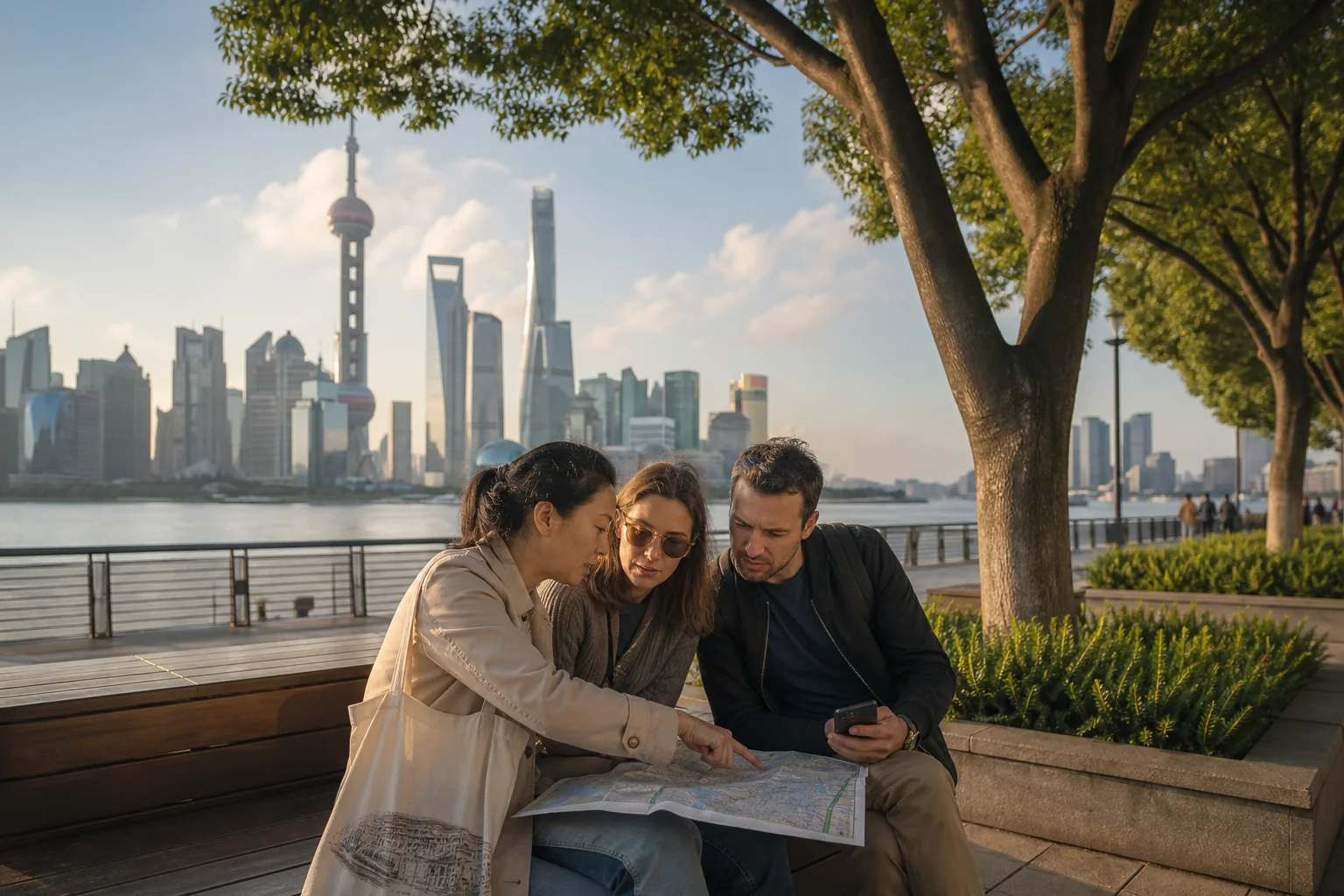
After a museum, most groups benefit from one deliberate final experience rather than a forced parade of observation decks, malls and river crossings. A short waterfront walk may be enough on a clear day. If visibility is poor or the group is tired, a nearby meal or hotel return can be the better decision. There is no value in staying out simply because an online itinerary lists a second landmark.
For children and senior travelers, include a seated break and identify the point at which the route can end without disappointment. For art-focused travelers, leave room for a single exhibition or guide-led gallery discussion. The practical plan is one that preserves attention for the collection and still makes the evening feel easy.
When a guide or private car adds value
A guide is useful when you want help choosing a realistic museum focus, placing it in the day, translating practical instructions and keeping the interpretation at a comfortable level. Do not assume an outside guide can conduct a tour inside every gallery without approval; the museum publishes its own rules for organizations and guided activities. Agree the exact service scope before booking.
A private car is most useful for a hotel pickup, family logistics, luggage, rain, heat or a protected transfer to a later appointment. It does not turn the museum into a drive-through attraction. The plan should name what is included, the driver and guide timing, the likely pickup point, museum admission assumptions and any separately priced exhibition or audio-guide cost.
For a tailored museum day, share your hotel, date, number of travelers, time available, mobility or child needs, preferred collection themes and the next fixed appointment. That lets the planner decide whether Museum East belongs in the route at all, rather than fitting it into a generic Shanghai checklist.
Practical questions
Do I need to reserve Shanghai Museum East?
The museum currently states that individual visitors can enter without an advance reservation with a valid original identity document after security. Special exhibitions, interactive areas and peak-period arrangements can have separate rules, so confirm the official page close to your visit.
What should international visitors bring to Shanghai Museum East?
Bring the original passport or another identity document accepted by the museum. A photo of a passport is not a substitute for the original document at an ID-controlled entrance.
How long should I allow for Shanghai Museum East?
Allow two to three hours for a focused first visit. A shorter visit can work when you choose one collection theme or a confirmed exhibition and protect the rest of the day.
Is Shanghai Museum East easy to combine with the Bund?
It can be combined, but it crosses a significant part of the city. It works best when the museum is a main part of the day and the route uses only one or two connected Pudong or riverfront stops rather than repeated cross-river transfers.
Can a private guide take us inside Shanghai Museum East?
Confirm this in advance. The museum has its own rules for guided activities and access. A local guide can still help plan the museum visit, transport and broader Pudong route without promising an unapproved in-gallery service.