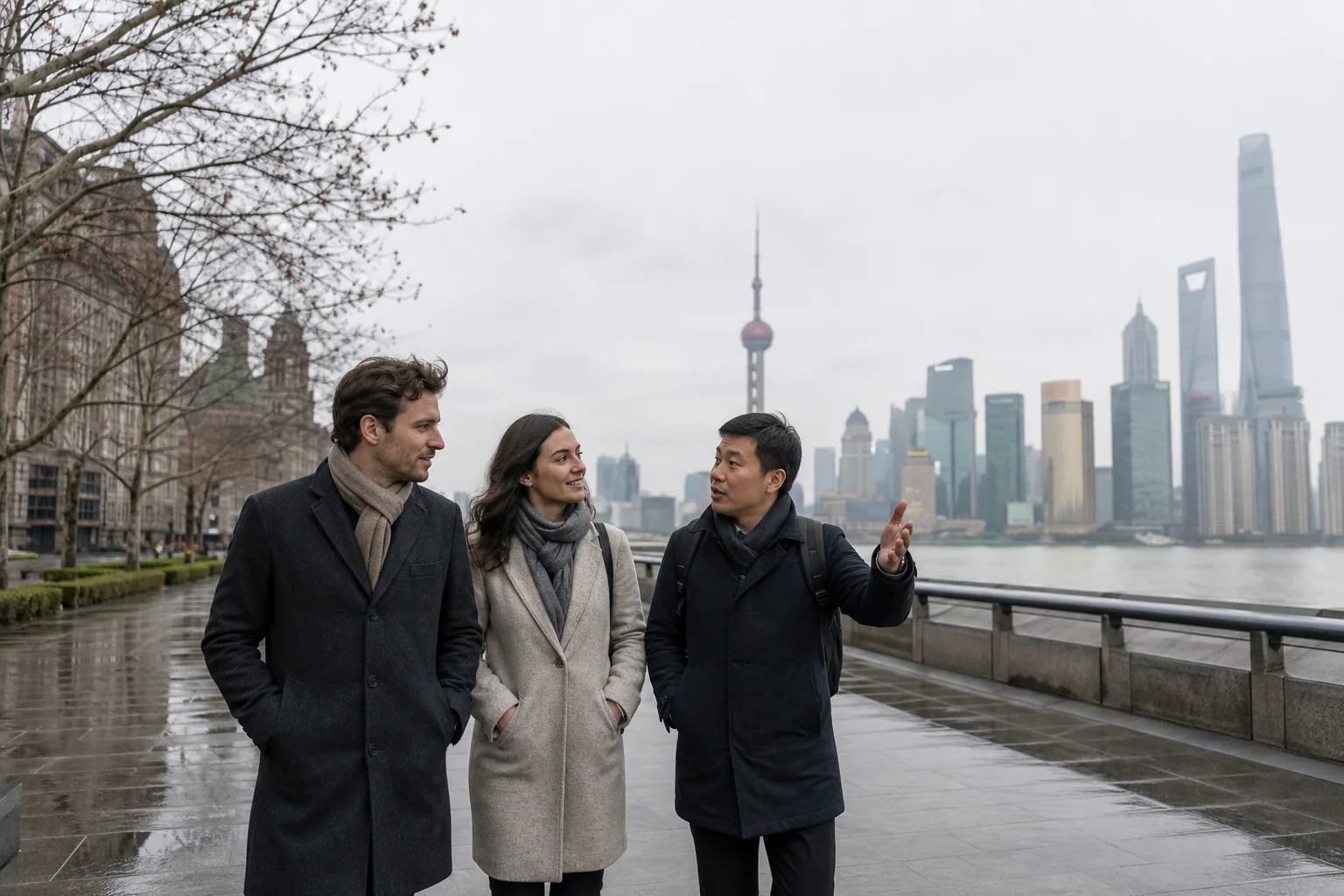
What Shanghai winter actually feels like
Shanghai winter runs roughly from December to February, but the useful description is not simply cold. It is often damp, gray and changeable, which can make an ordinary temperature feel sharper than visitors expect. Shanghai's official city guide describes typical winter averages around 3 to 11 C, notes that snowfall is rare, and identifies late January to early February as a period when north winds can feel especially biting. That is why a thin fashion coat and optimistic forecast screenshot can make for a disappointing first day.
Do not plan a snow holiday. A dusting can happen in an unusual cold spell, but it is not a dependable attraction or a reason to book a winter itinerary. The real strengths are a lower-pressure city rhythm, atmospheric waterfront walks, warm meals, museums, galleries, tea breaks and evenings that can be very comfortable once you move indoors. Treat a clear, crisp day as a bonus and a drizzly day as a reason to switch the order of your plans.
The daily forecast matters more than a monthly average. Check temperature, wind, rain and air quality shortly before each day, then group the route by district so you can go inside without losing an hour in a cross-city transfer. A private guide or driver can make a cold day smoother, but the itinerary still needs weather-aware walking distances and a real place to warm up.
- Expect damp cold rather than guaranteed snow.
- Use the daily wind and rain forecast to choose the outdoor part of the route.
- Keep one indoor cultural stop and one warm meal in every full winter day.
- Avoid back-and-forth river crossings just to rescue an unrealistic itinerary.
What to pack: layers and dry feet beat a heavy suitcase
Bring a warm outer layer that can handle wind and light rain, then add layers you can remove inside. A knit or fleece mid-layer, long-sleeve base layer, scarf and compact gloves cover most city days better than one enormous coat. Hotels, museums, shopping centers and restaurants can be much warmer than the promenade outside, so a practical layering system saves you from carrying an item you cannot comfortably wear indoors.
Shoes matter more than visitors often expect. Choose comfortable, closed walking shoes with grip for wet stone, station floors and long historic-district days. Carry or buy a compact umbrella, but do not make it your only rain defense; a hood or water-resistant outer layer is more useful when wind turns a light drizzle sideways. Keep a spare pair of dry socks if you are building a full day around outdoor neighborhoods.
Bring a portable battery, lip balm, any personal medication and a small tote for layers removed indoors. You do not need arctic equipment for a normal Shanghai winter, but you do need to avoid becoming cold and damp early in the day. Families should pack for the child who gets cold first, not the adult who insists they are fine.
- Water-resistant outer layer, warm mid-layer and scarf rather than one rigid outfit.
- Closed shoes with grip for wet pavement and long walking stretches.
- Compact umbrella plus a hood or outer layer for wind-driven rain.
- Portable battery and a small bag for gloves, scarf and indoor layers.
Build each day around one outdoor window and one indoor anchor
A winter Shanghai day is strongest when it has a simple backbone. Put one outdoor experience into the best weather window: a Bund walk, a historic-lane wander, a park section or a riverfront view. Follow it with an indoor anchor in the same broad area, such as a museum, gallery, historic interior, tea break, long lunch or a reservation you genuinely want. This lets the weather change without making the day feel cancelled.
For a clear morning, start outdoors while your group is fresh, then move inside before the cold settles into the hands and feet. For a wet morning, begin with the indoor anchor and use a later break in the rain for a short walk rather than a multi-hour circuit. Avoid treating the forecast as a command to stay in the hotel. Shanghai's winter atmosphere can be rewarding, but it is better in deliberate portions.
Keep the stops geographically connected. People's Square and the Bund can form one kind of central day; the former French Concession has a different pace; Pudong can be a separate day with its own indoor and riverfront options. The plan should give the driver, guide or independent travelers a clear next district instead of a wish list scattered across the map.
Use warm food and tea breaks as part of the route
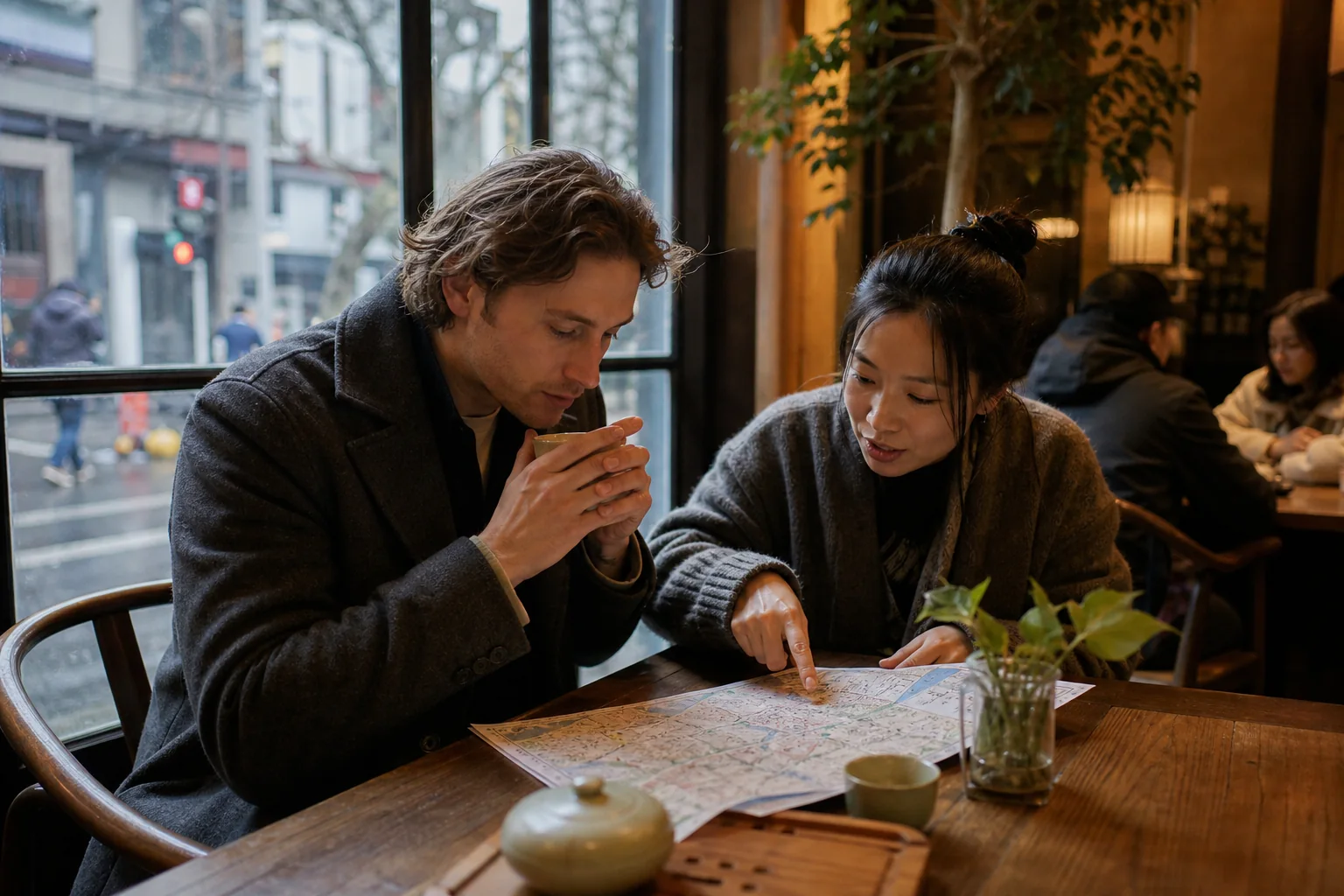
A winter meal is not merely a gap between sights. Plan it as a reset point with seats, toilets, hot drinks and enough time to take off a wet outer layer. A soup, noodle dish, dumpling meal or warm tea can make the next two hours much more enjoyable than an impatient snack eaten outside. If there are dietary restrictions, tell the planner or restaurant early rather than hoping to solve them while hungry in the rain.
Do not chase a long list of viral restaurants at lunchtime. In winter, a practical nearby meal may be the better choice if it preserves time for a museum booking, a waterfront light window or a calm return before dark. If food is a main interest, make it the theme of a district rather than adding a single distant restaurant to a sightseeing day.
Shanghai's breakfast and snack traditions are also useful for a cold morning, but choose what suits your comfort level and schedule. A visitor who needs coffee, a seated start and a familiar option should plan that openly. Travel becomes easier when the route respects the group's real habits instead of treating every meal as a test of adventure.
Holiday weeks and seasonal events need a separate check
Winter can overlap with Christmas and New Year activity, the Lunar New Year travel period, school breaks and limited seasonal events. These are reasons to check current official calendars, not reasons to copy a previous year's schedule. Event dates, museum opening arrangements, restaurant availability, ticket releases and city traffic can change. Confirm the actual year and travel day before promising a light show, market, ice rink, fireworks display or special performance.
During a major holiday, protect the non-negotiable elements first: the hotel, date-specific tickets, long-distance rail, airport transfer and any dinner that truly matters. Then keep the rest of the day flexible. The most comfortable itinerary during a busy period may have fewer sights but better timing, shorter walks and a confirmed return plan.
If you want a winter-only activity, ask for the current official listing after your dates are fixed. This avoids presenting a temporary pop-up as a permanent attraction and lets the planner choose between a seasonal experience, an indoor cultural visit or a simple neighborhood day based on real operating information.
Winter day trips: choose comfort over a longer checklist
Water towns, Suzhou and Hangzhou can still work in winter, but they need a different standard from a warm-weather day trip. Stone paths can be wet, bridge slopes can feel exposed, gardens can be beautiful but less forgiving when the group is cold, and sunset arrives with less margin for a relaxed return. Choose one core experience, include an indoor or seated pause and protect the journey back to Shanghai.
A water town is good for travelers who enjoy historic lanes and a slower walk even when the scenery is quieter. Suzhou suits travelers who want a garden or museum focus plus a compact old-city section. Hangzhou is stronger when West Lake conditions and the planned walking distance make sense for the actual day. None of these needs to be added simply because an itinerary has an empty winter date.
Tell the planner if you dislike cold, need minimal walking, are traveling with a child or have an evening reservation back in Shanghai. That information is more valuable than choosing a destination from a generic top-ten list. A shorter, well-paced winter day is often the more memorable choice.
Finish the evening warm, close and easy to get home
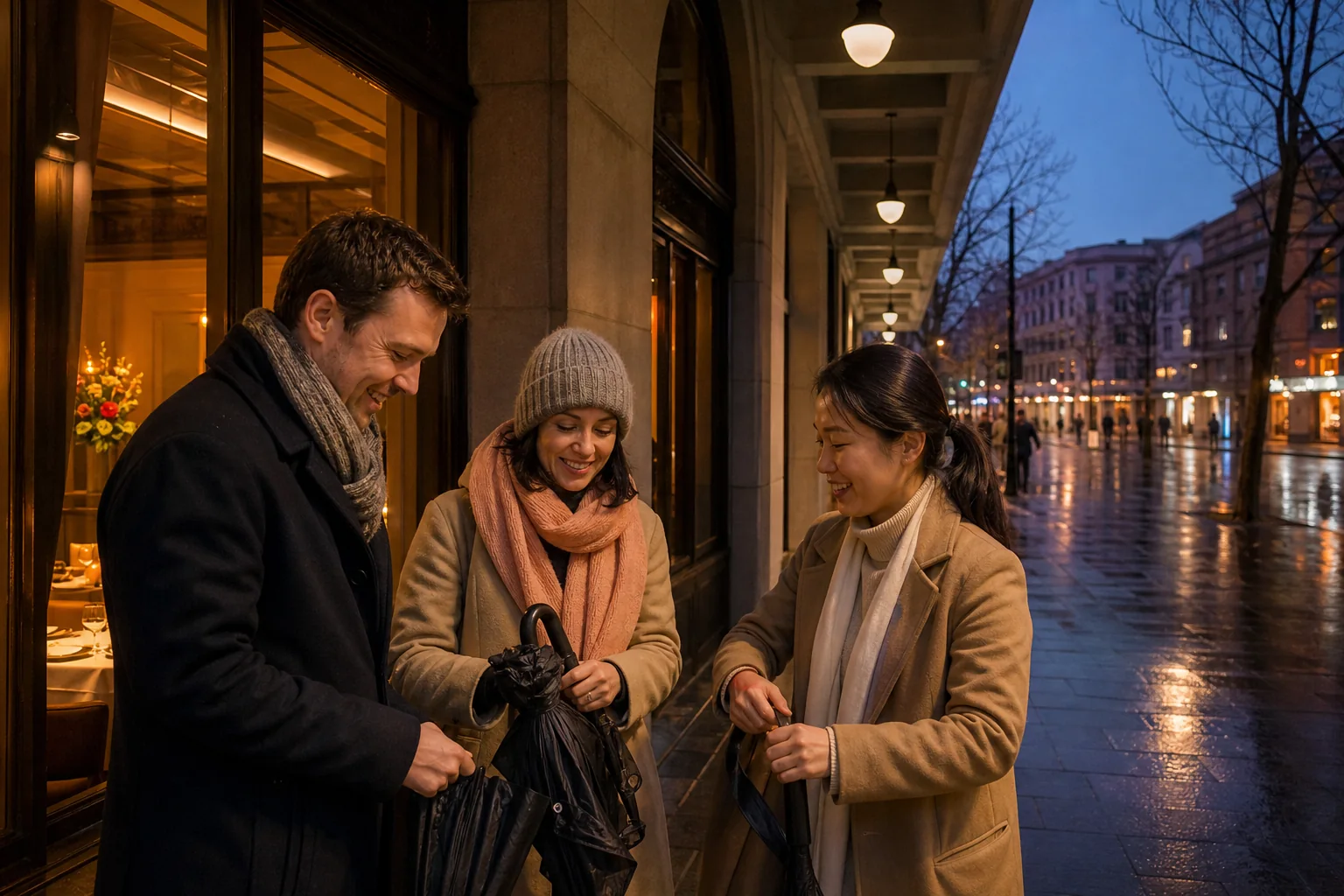
Winter evenings are a good time for a river view, a concert, a relaxed meal or a neighborhood walk under cover, but do not make every night a long outdoor photo session. Build the final stop near the dinner, hotel or planned pickup point. When the pavement is wet and the temperature has dropped, an easy twenty-minute finish is better than a famous landmark that requires another hour of transfers.
For a privately arranged car, confirm the hotel, the latest realistic pickup time, the legal meeting point and whether the route includes a guide or only the vehicle. Share luggage, child-seat or mobility needs before the day begins. A driver can make a rainy evening easier, but only when the handoff is planned rather than improvised at a crowded curb.
For a tailored winter day, send your travel dates, hotel, number of travelers, preferred pace, interests, mobility needs and any fixed ticket or dinner. The route can then use good weather when it appears and protect you from the parts of winter that do not need to become an endurance test.
Practical questions
Does it snow in Shanghai in winter?
Snow can occur during an unusual cold spell, but it is rare and should not be the basis of a Shanghai winter trip. Plan for cool, damp conditions and treat any snowfall as an unexpected bonus.
How cold is Shanghai in winter?
Shanghai's official city guide describes typical winter averages around 3 to 11 C. Humidity and wind can make it feel colder, especially in late January and early February, so check the daily forecast rather than relying only on averages.
What should I wear in Shanghai in December, January or February?
Use layers: a warm outer layer that handles wind or light rain, a mid-layer, scarf, practical closed shoes and a compact umbrella. You generally do not need arctic gear, but dry feet and a wind-resistant layer make a large difference.
Is Shanghai worth visiting in winter?
Yes, if you plan for a city trip rather than a snow holiday. Winter suits museums, food, tea breaks, neighborhood walks, evening views and a flexible balance of indoor and outdoor time.
Are day trips from Shanghai good in winter?
They can be, but choose one main experience, keep walking realistic and protect the return to Shanghai. Weather, wet stone lanes and an earlier dark period matter more than in warm weather.