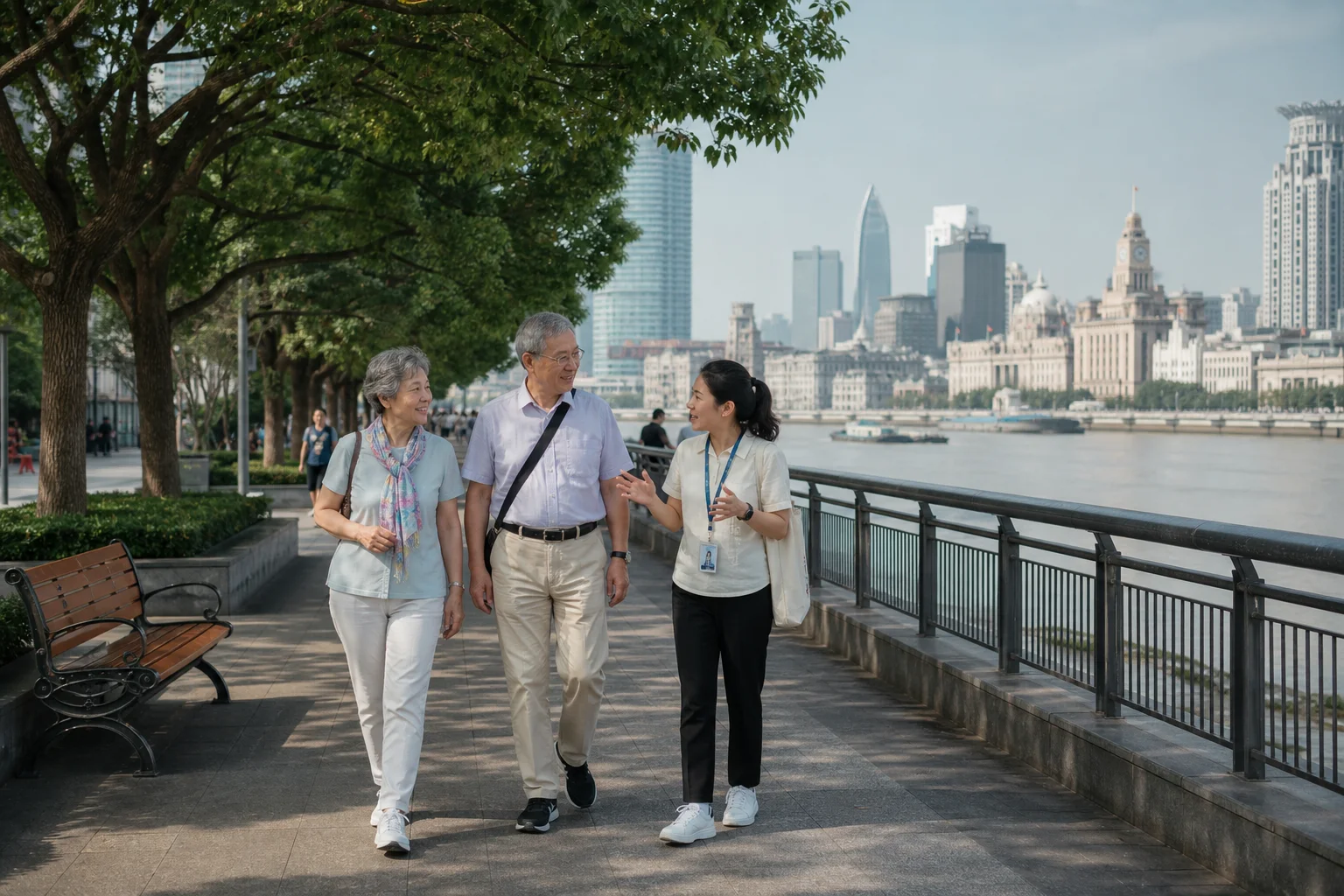
Mobility information should be specific
“Walks slowly” can mean many things. Share comfortable walking duration, stair tolerance, use of a cane or wheelchair and whether the traveler can enter a higher vehicle. This allows the route to be designed rather than merely slowed down after arrival.
Use fewer districts with stronger contrast
A flat Bund period, one historic or cultural stop and a comfortable meal can still provide a complete Shanghai story. Crossing the city for several short stops often creates more fatigue than value.
Private transport is useful, but traffic and parking mean vehicles cannot always stop at the exact doorway. The walking route should identify realistic drop-off points and places to sit.
Water towns need a separate comfort decision
Historic stone paving, bridge steps and narrow lanes are part of the environment. A shorter Zhujiajiao route may work, while a long Wuzhen or Zhouzhuang day may not suit every traveler. The correct answer depends on the individual, not age alone.
Describe ability rather than age
Useful planning information includes comfortable walking minutes, stair tolerance, balance on uneven paving, hearing or vision needs, use of a cane or wheelchair and whether a higher vehicle is easy to enter. Two travelers of the same age may need completely different routes, so specific information produces a more respectful plan than a generic “senior tour.”
A private vehicle reduces long transfers but cannot stop at every historic doorway or promenade viewpoint. Ask about the realistic walk from drop-off to each stop. One flat Bund section, one cultural or historic interior and a calm lunch can form a complete city day without repeated cross-town movement.
Water towns and regional days
Zhujiajiao can be shortened, but it still contains stone paving and bridge slopes. Zhouzhuang and Wuzhen generally involve a longer day and more old-town walking. Suzhou gardens include thresholds, busy paths and uneven details. Choose the destination after discussing the individual traveler’s comfort rather than assuming every nearby day trip is equally accessible.
Practical questions
Can the day be wheelchair accessible?
Some areas can be adapted, but historic lanes and bridges are not fully step-free; send exact mobility needs first.
Is a water town recommended?
It can be, after checking bridge tolerance, paving and total transfer time.