A private route with a clear purpose
Travelers interested in architecture and Jiangnan culture who want more depth than a combined one-day excursion.
- Give Shanghai a complete city narrative before leaving the metropolis.
- Read Zhouzhuang through bridges, waterways and historic residences.
- Focus Suzhou on one classical garden plus a connected old-city layer.
- Use an overnight sequence to avoid duplicated Shanghai returns.
Three places, three different questions
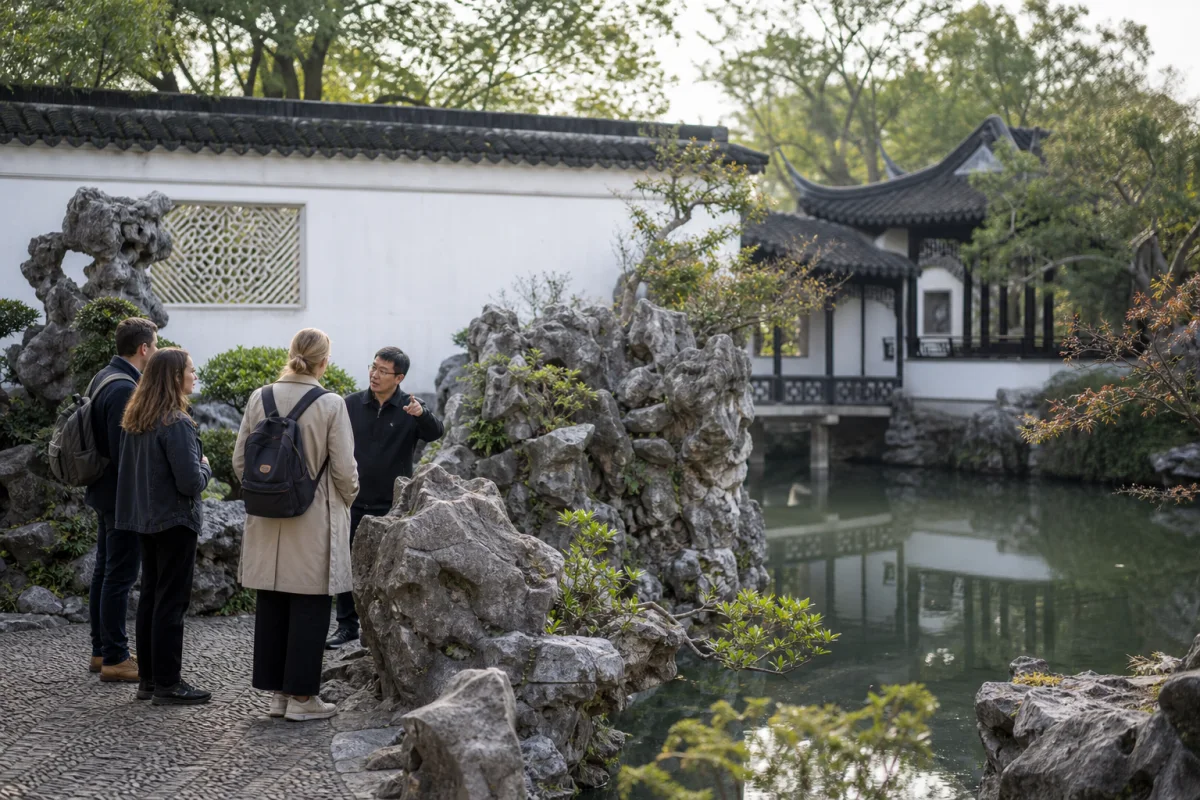
Shanghai explains how a port city changed across neighborhoods and across the Huangpu River. Zhouzhuang shows how a settlement was organized around water. Suzhou’s garden tradition demonstrates how rocks, plants, pavilions and framed views can compress a wider landscape into private space. Keeping those questions separate gives the tour intellectual shape.
The route can still include familiar anchors such as the Bund, Yu Garden area, a former French Concession walk, Zhouzhuang’s bridge network, Lingering Garden, Pan Gate and Tiger Hill. The exact combination changes with the date and the group’s interests; adding names is less important than allowing time to interpret them.
Choose the overnight sequence by travel flow
Zhouzhuang and Suzhou can be ordered in more than one way. Hotel availability, weekend crowds, luggage and the onward destination determine the sensible sequence. A scenic overnight is worthwhile only when it does not add awkward backtracking or leave the next morning dominated by road time.
If the travelers return to the same Shanghai hotel, large luggage may remain there. If they continue to another city, every case must be counted for the vehicle. Room layout and breakfast timing should be confirmed before the regional departure, not solved at the hotel desk.
Suzhou should not become a garden checklist
One well-explained classical garden is usually more memorable than rushing through several. A connected canal neighborhood, city gate or hill can then show how the garden tradition relates to the wider city. Popular gardens may use timed reservations and passport details, especially on busy dates.
Zhouzhuang also benefits from a coherent loop rather than repeated entrances and exits. A boat may add a different perspective if available, but it does not replace walking or guarantee a quiet canal.
Adjust for children and senior travelers
Private transport reduces intercity transitions but historic paving and garden thresholds remain. Share stroller dimensions, walking tolerance, cane or wheelchair use and vehicle-entry needs. We can shorten routes and prioritize seating without representing the old towns as step-free.
A possible sequence
The order remains flexible around traffic, entries, weather and your confirmed pickup.
- Days 1–2: Shanghai orientation
Arrival followed by a connected city day using river geography, historic texture and modern Shanghai as the framework.
- Day 3: Zhouzhuang waterways
Leave Shanghai, follow a bridge-and-canal route and continue to the selected regional hotel.
- Days 4–5: Suzhou in depth
Explore one classical garden, an old-city water district and a supporting cultural site without racing between gates.
- Day 6: Return or continue
Finish in Shanghai or transfer onward according to the confirmed transport plan.
Practical questions
Can Suzhou and Zhouzhuang be visited in one day?
They can be compressed, but this six-day route keeps them separate so neither becomes a short gate-to-gate stop.
Which Suzhou garden will we visit?
We select one appropriate garden after checking the date, likely crowds, reservation rules and your interests.
Can the tour finish at a Suzhou train station?
Yes. Send the train details before finalizing the last day so luggage and station arrival time are built into the route.